Tía Margarita
Before heading off to bed on the very first night of my homestay, Catalina stopped me in the kitchen and asked me if I had tapones para los oídos. Not knowing the word for earplugs yet I must have looked confused, because she began animatedly miming stuffing her ears with plugs. Ahh, yes yes, I have earplugs I told her…but why?
She began telling me that Tía Margarita is 83 years-old, very poor, and very sick. She has bad arthritis, a bad heart, and a big mass in her abdomen–but she can’t get an operation. There’s nothing the doctors can do she says. She has nobody in her life, only one niece who doesn’t care, and so Catalina lets her live here and takes care of her. (I later learned that Margarita is a distant relative of Catalina’s ex-husband, not a close relative of Catalina’s.) Catalina told me she’s in a lot of pain all night, and recommended I use my tapones. Still slightly confused and wondering if I was understanding the situation correctly, I headed back to my room.
So began the first of many sleep deprived nights. Margarita and I have adjacent bedrooms, and there are about 10 inches of open space beneath the ceiling so that all sound carries between our rooms. Her afflictions often keep her up all night, and the sounds of her suffering are incredibly soul-wrenching. She whimpers, cries, and struggles to get a good breath. She murmurs prayers and pleads with God. She pants and moans in pain. All night. Her tortured sounds seep past my tapones and into my subconscious and give me dark, fitful dreams.
After my first few nights I was drained and doubtful that I could stay living in that room, to bear witness night after night to this poor old woman’s suffering without being able to do anything about it.
Micho the Cat
Daytime with Margarita is a different story–it is often still punctuated with pain, but another much more lighthearted part revealed itself to me within my first few days of living here. He has four legs and a fluffy tail and goes by the name Micho.
In Xela there are many stray cats who live on the rooftops in order to steer clear of the packs of dogs who dominate the streets. Micho is one such cat, a handsome albeit scruffy orange and white male. He comes to our rooftop over the courtyard twice daily and loudly announces his presence with his raspy meows, waiting for his friend Margarita. Over time I pieced together that he’s been coming like clockwork for many years but stays on the roof, because Catalina keeps things tidy and has disdain for street animals with their pulgas–fleas.
Yet every day, in defiance of Catalina’s disdain, Margarita spoils Micho. She keeps a plastic bag of fried chicken tied tightly beneath a chair in her bedroom, and when Micho comes meowing he gets a piece of chicken tossed up on the roof. Each evening he also gets a tray of kibbles which she wedges in a special spot under the awning between a wooden post and the outside wall of the house. If Micho is lucky, he also gets treated to chicharrones from the market.
When Margarita noticed my delight that a kitty was coming to visit, she immediately began requesting my help. I was pulled into her routine as an accomplice in caring for Micho, and a sweet friendship began to grow between us each day over our shared love of animals.
Margarita will knock softly on my door when Micho comes meowing and beckon me to join her while motioning Shhhh with a finger over her lips. She’ll ask me to stand guard looking down the hall to see if anyone is coming, or she’ll have me be the chicken tosser since she’s so easily winded. The one activity that she typically refuses help with is wedging the kibble tray–she wants to be the giver of this gift. It gives me anxiety to watch this tiny old woman with major mobility issues teetering up on a step stool, but I understand her need to accomplish this one task that brings her so much happiness.
One afternoon early on I asked about the name Micho–was it a common name for people here? She burst into laughter and said No, no, no. I asked her for the spelling and looked it up on my SpanishDict app, and burst into laughter myself–Micho means pussy! He also goes by Mich (pronounced meesh) for short, our friendly little neighborhood puss. It’s perfect.
Though it’s still very difficult to share in Margarita’s pain every night, my doubt that I could stay in our close quarters soon dissipated with the blossoming of our friendship–in life you always have to take the light with the dark, and by now I wouldn’t trade spaces for anything.
The Courtyard Convo
Margarita also saves bread for the birds, her precious pajaritos, and each afternoon she slowly hobbles out back to lovingly spread crumbs about the courtyard. The other day I was surprised and amused when she reached up her shirt and rummaged around for a dinner roll she’d been saving for the birds, then presented it to me to go crumble because her knees hurt too much to do it herself.
Once our animals friends are fed she’ll sit down on her plastic stool in the warm sunshine and we’ll admire them while they dine. Her musings usually go the same way: Aren’t they precious? Aren’t they beautiful? How could anybody not want to feed them and care for them? Jesus tells me to care for them. It’s very important. And how could anyone not want to? They’re just so beautiful! We care for them because our hearts are good, not bad.
Every day I agree with her on each point, and we smile at Micho and the birds eating with gusto. Her whole face softens and lights up with joy, and it reminds me of how powerful something so simple can be: when you choose to spread love to others you share in that glow as well, no matter how much pain you carry yourself.
Dementia and her Demons
It didn’t occur to me right away that we were having the same conversation each day in part because of her dementia, but that information came to light at the dinner table after about ten days of our daily routine. It was a bit of a face-palm moment for me–of course she has dementia, Annie–but it had gone undetected in my mind because to me gushing about animals day in and day out is standard. Once I began looking at Margarita’s behavior through this new lens, other aspects of her dementia began to come into focus.
All through the night, in addition to her pleadings with God to stop her pain, she has what sound like fever dreams. She carries out frightened, mumbling conversations with the people who haunt her hallucinations, sometimes crying out in terror.
Last week she let out a blood-curdling scream, and I threw off my covers and ran into her room. Mi mano, mi mano, mi mano she cried, tossing back and forth in her bed. With my cellphone flashlight I frantically looked at the hand in question, thinking perhaps a spider or insect had gotten her. There was nothing to be seen, and Catalina came bursting in the room relieving me of my duty before I could ascertain what on earth had happened to her hand. The next day I learned that she hallucinated that a bad man was in her room standing over her, and he had grabbed her by the hand.
After this incident Catalina moved Margarita’s bed down the hall into her room, fearing that Margarita’s problems were too much for me to be dealing with. I felt really bad about this, because Margarita still lingered in her bedless room late into the evenings, nodding off while slouching in a plastic chair with a blanket around her shoulders. This was her room, her space–she didn’t want to be in another room. After a few nights of noticing this I went and retrieved Catalina from the kitchen to show her how much Margarita wanted to be in her own room, and Catalina sighed Ohh, Margarita, and the bed was brought back into her room once again.
Beyond the hallucinations and short-term memory loss, she also experiences the depression and apathy that can come with dementia (and of course chronic pain as well). On most days she laments that she’s still living, and expresses the sentiment that she wishes for death with every possible combination of words: I just want to die. Why am I still living? I have too much pain, too much pain. I wish I were dead. I don’t want to be living anymore. Why won’t death come? Death is all I want, yet here I am alive.
Sometimes the wishes for death come off cavalier, bluntly matter of fact. Other times they’re conveyed with a dreaminess, a longing. She’ll show me yellowed photographs of her family and tell me how she can’t wait for death so that she can meet Jesus, and see her parents, her brothers, and her only son who died at birth. On one particularly bad day, when the pain was too much to bear, she crumpled into my shoulder and cried like a small, frail child, sobbing for death to come while I held her.
My heart has broken a thousand times over for Margarita, and admittedly I was not expecting a situation as intense as this to be a part of my homestay experience. I wish desperately that there was a solution to relieve her of her suffering, and I spend a good chunk of my days and nights worrying about her. But still I am incredibly grateful to have been placed here in this house. I’m grateful to be her next-door roomie and courtyard companion, and feel fortunate that I get to lend a hand to the one part of her life that’s still lighthearted and joyous. I’m grateful for the daily reminder of the capacity of the human spirit to spread love no matter what, to love in the face of intense pain and suffering. And I’m very grateful that every day without fail, in the midst of the madness and the sadness, along comes Micho and Margarita smiles.
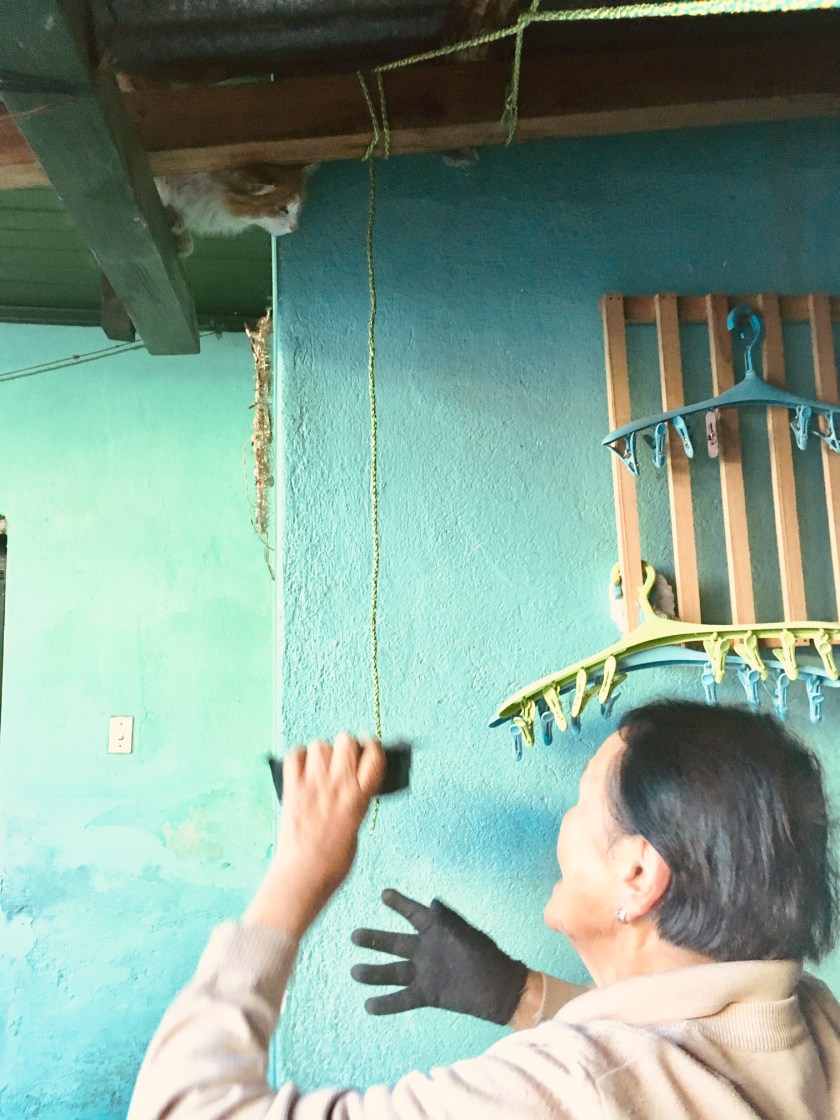
The Micho and Margarita. Waiting not-so-patiently in his special spot for kibbles.
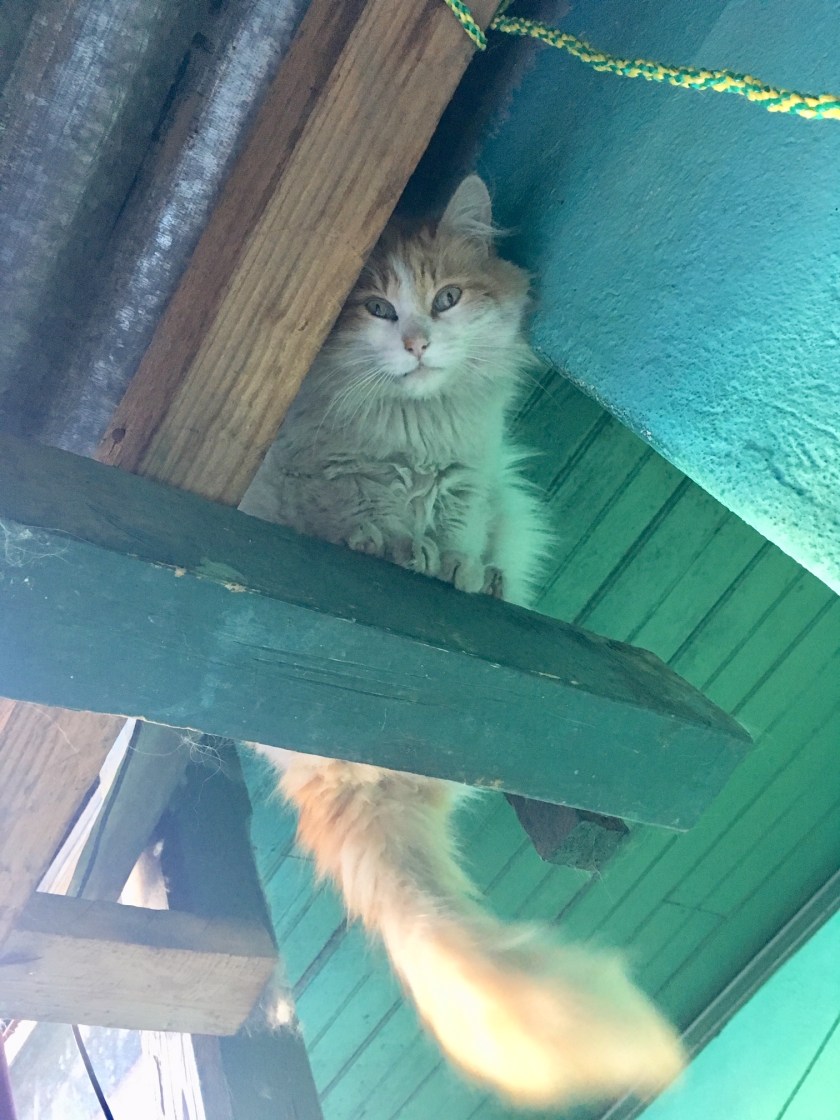
Sweet Mich.
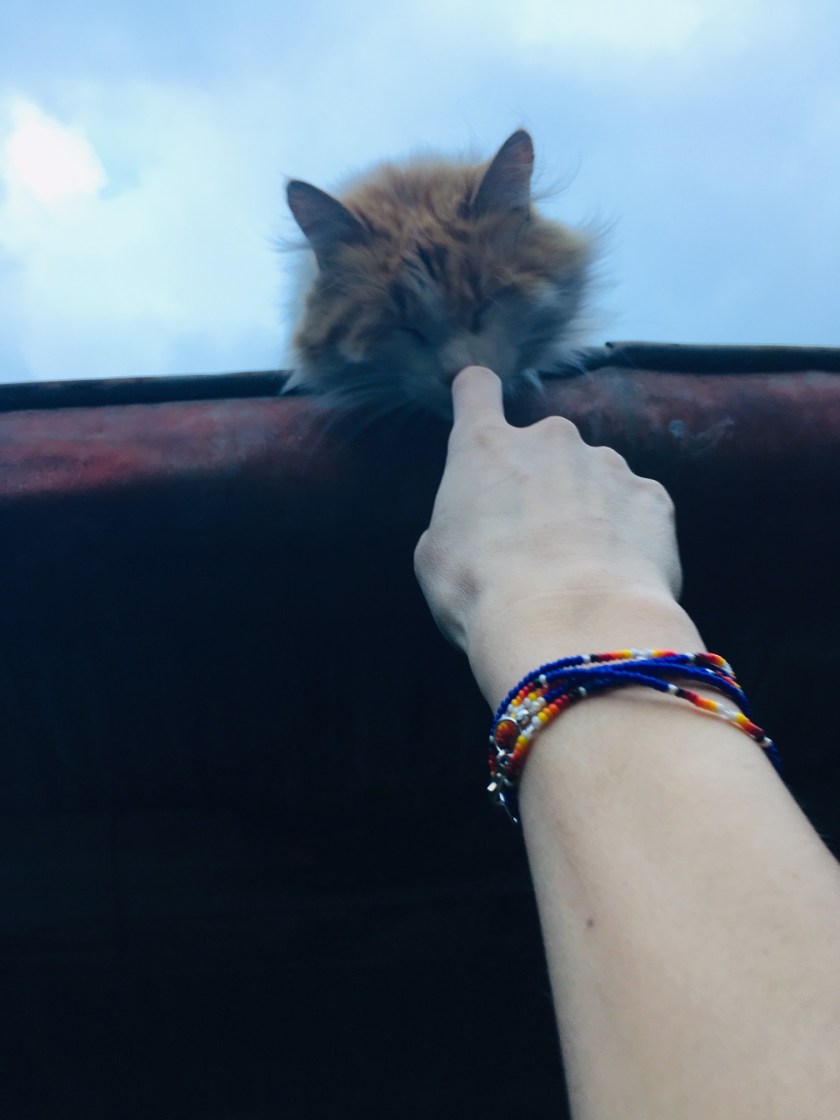
Rooftop scritches.
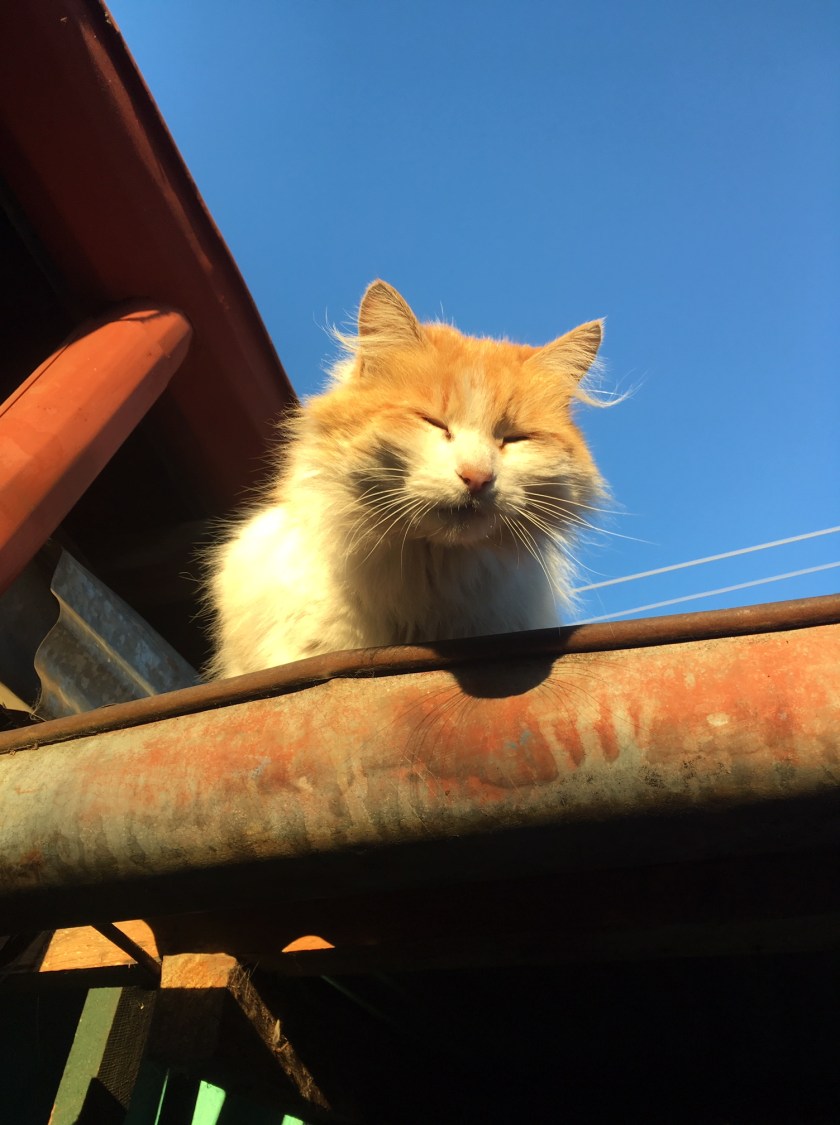
Sunshine squints.
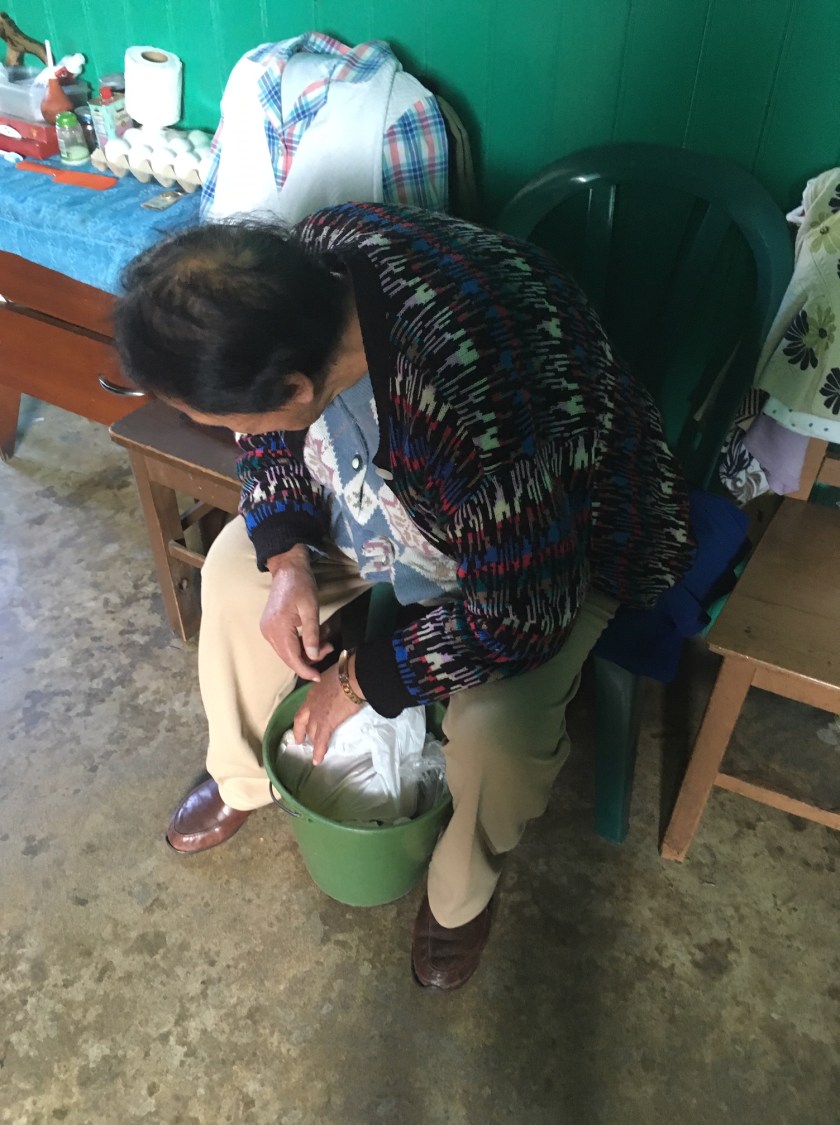
Margarita and the secret stash.
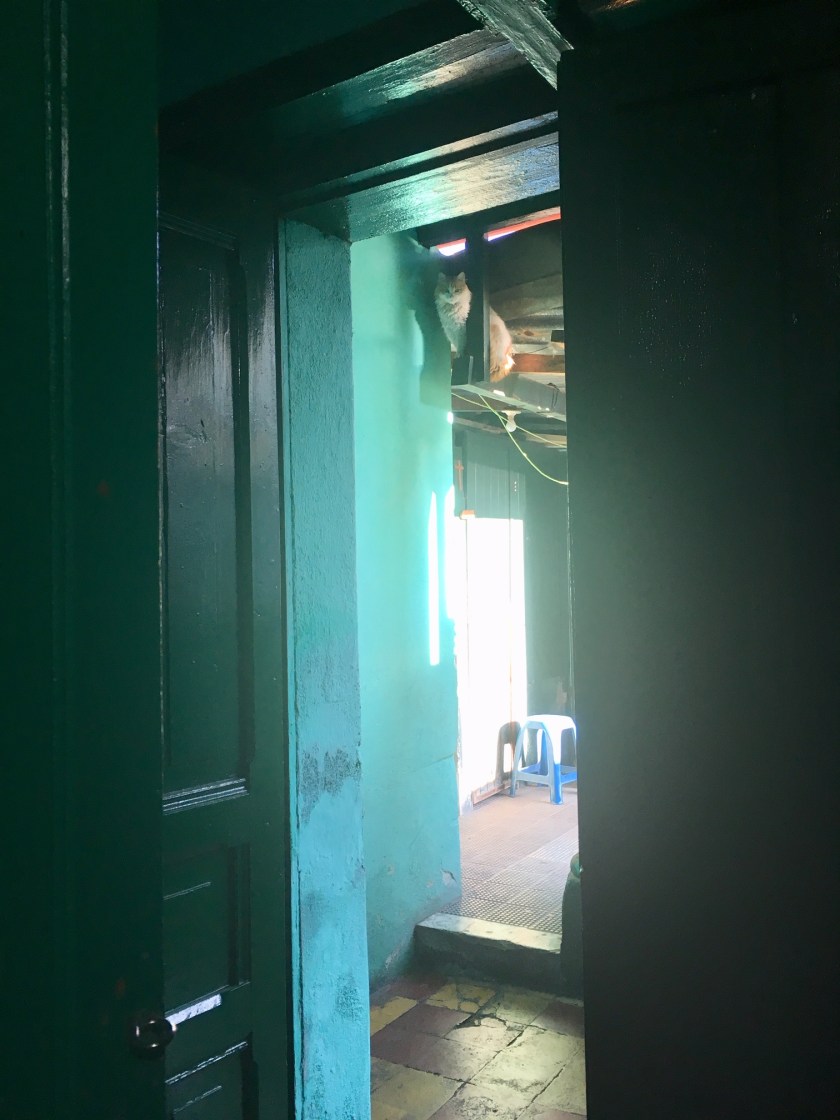
As seen (and heard!) from the doors to Margarita and my quarters.
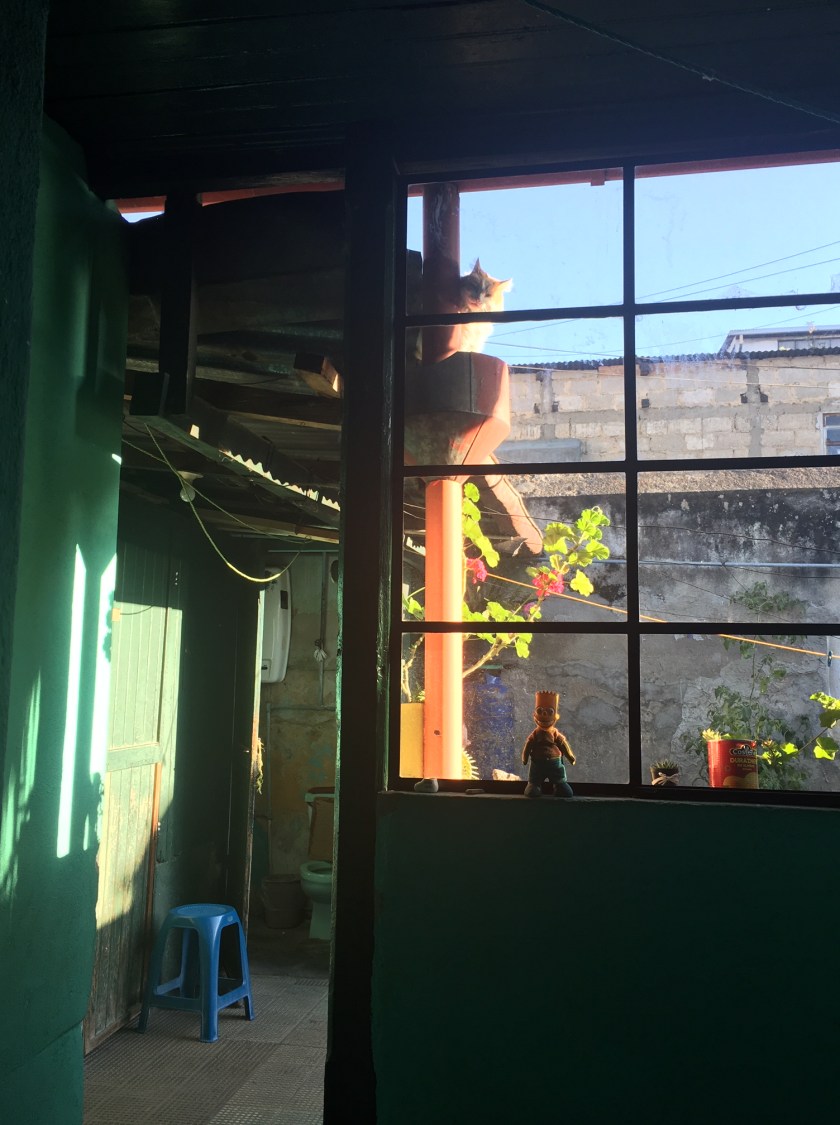
Yooo-hooo, Margarita! Dónde estás?
Micho meows for Margarita.

 annie.life
oohhhh i LOVE these stories! you were placed there by divine design to give solace to margarita. and to micho. i wonder who will feed him when margarita has her final wish.
>
LikeLike