Seven Weeks in Xela & Spanish School Update

It’s hard to believe that I’ve been here in Xela for seven weeks, and that my days here are very numbered–in one week from today I’m taking the bus back to Guatemala City to begin my journey south to Honduras for some scuba diving.

My experience here has mostly been shaped by my relationship with my darling little roommate Margarita. So much has happened with her health since my last post about her, and the evolution of our dynamic deserves a post of its own–more on all that coming up soon! For now, a general update:

All in all, things have been great. I have a nice pleasant routine to my life here, and am keeping very busy. My homestay family has become family, this city my home, and my current Spanish teacher is a soul sister with whom I will study via Skype long after I return to the States.

I’m comfortably conversational in Spanish, able to carry out hours-long conversations on all of my favorite topics–politics, current events, justice, oppression, culture, conservation, history, music and more. I have a lonnng ways to go until I reach fluency, and I make a million mistakes and hit a bunch of roadblocks every day, but I’m pleased with my progress and excited for what’s to come.

My first three weeks of Spanish school were a bit rocky. The school I started with looked great on paper, but didn’t live up to my expectations. There wasn’t a thorough assesment of my current abilities when I first arrived, and the teaching of grammar and concepts felt scattered and arbitrary.

My teachers there (I tried two different ones) also did not communicate any plan for my learning, and that coupled with the lack of resources such as textbooks for them to teach with left me feeling frustrated a lot of the time. I loved both of the teachers I had there as human beings, and enjoyed my conversations with them, but their approach to teaching was not a good fit.

After three weeks I decided to cut the cord–there was no reason to have lukewarm feelings about my school when there are dozens of great schools in this city to choose from.

Casa Xelajú & Palmenia

Enter Casa Xelajú. This school had been my first choice when researching before I came here, and I made a last minute decision to switch to the other one just two weeks before my flight (What is it they say about test-taking and going with your first choice? Hmm…)

Casa Xelajú is night and day from my other school: They are incredibly organized, well-resourced, and professional in their teaching. From Day One I was over the moon with my teacher there, Palmenia. She’s very skilled in planning varied lessons and engaging activities that build on one another, and very intuitive in knowing what I need to progress. When she came in on our second day with a neatly organized and intentional printout of her plan for the rest of our week, including all activities and homework, I nearly cried tears of joy. The teacher in me sees and loves the teacher in her.

We’re also soul sisters in our worldview. We’re passionate about all of the same subjects, and have deep conversations about the political and cultural situations that prevent progress in both of our countries. Since she recognizes and shares my passions she plans lessons accordingly, to deepen my Spanish abilities in the context of historical learning.

She’ll have me read short biographies of influential Guatemalans like Rigoberta Menchú, the indigenous human rights activist who won the Nobel Peace Prize in 1992, or President Jacobo Árbenz who was overthrown by a CIA-orchestrated coup in 1954 on behalf of the United Fruit Company. Then we’ll comb through the reading and discuss the grammar involved as well as the content, and later I will write about what I learned.

Listening comprehension exercices such as listening to a reading of Popol Vuh–the K’ich’e Mayan story of creation–similarly strengthen my Spanish while I soak in fascinating and important cultural history. Suffice it to say, learning with Palmenia is the best.

Beyond loving her as a teacher, we have other cosmic connections: We’re both fiery lionesses, our birthdays being one day apart–she’s four years and a day older than me. We also discovered in the first couple of days of conversation that we both have autoimmune arthritis, and so we’ve been able to have long discussions on health, diet, and natural treatment for autoimmue disease since she also has an aversion to pharmaceutical treatment.

She had heard from a friend that acupuncture is beneficial for treating pain, inflammation, and autoimmune disease, but she was unsure if it could really help her and had never given it a try. I was happy to share my experiences with her about succesfully treating my condition with acupuncture and diet, and answered a ton of her questions about my healing process. I had discovered an acupuncture studio here in Xela, owned and operated by a Guatemalteca, and had gone there when I was feeling a bit sluggish and inflamed because of my starch-heavy diet here. Even though Palmenia has lived here her whole life she didn’t know that this acupuncture studio existed, and now she’s looking forward to her first appointment.

Even though I feel like my first three weeks at my other school were not particularly useful in learning Spanish, my time here in Xela has unfolded precisely as it was supposed to: If I hadn’t chosen the wrong school, I would not have been placed in my current homestay and I never would have met and grown close with Margarita. And if I had started at Casa Xelajú right from the beginning, I would not have been placed with Palmenia, because she was out of town and returned to Xela the day before I switched schools and started with her. Sometimes life’s missteps point you on the right path anyways, and my experiences here are a perfect example of that!
It’s a Small World After All…

Carlos & California Love

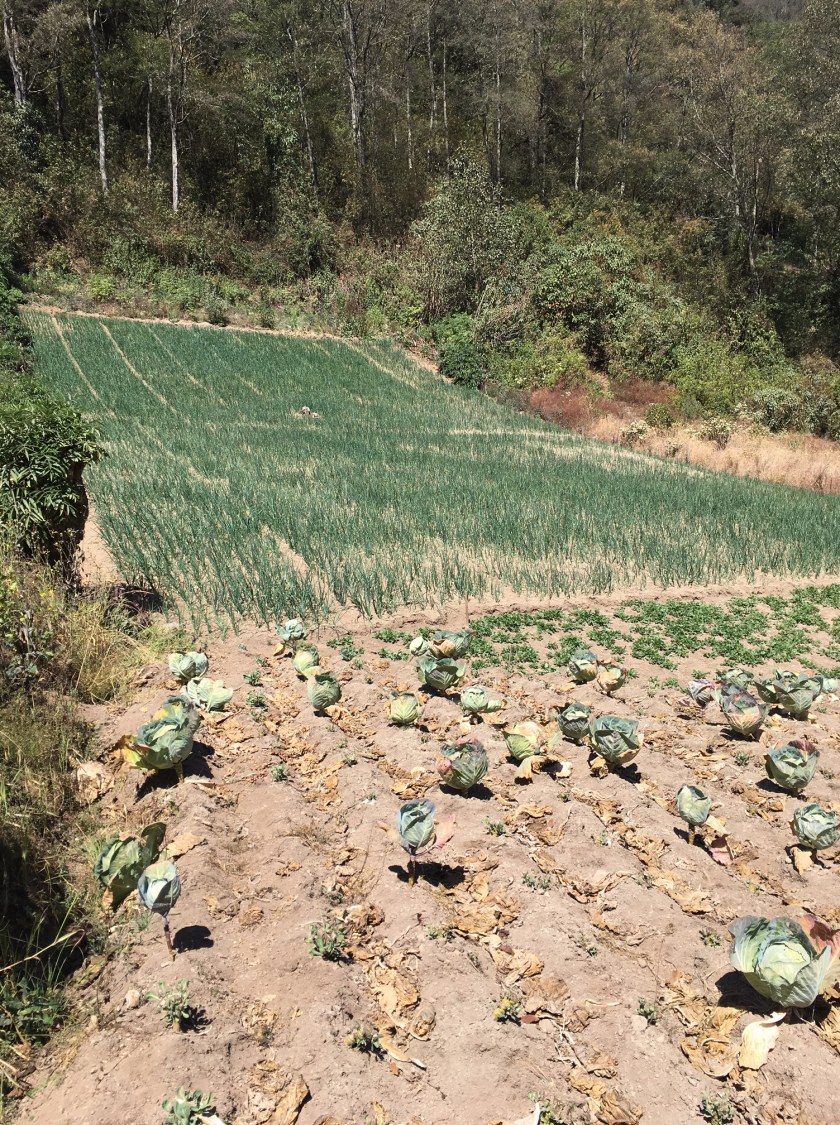
A short while back on one sunny afternoon after class, I took a chicken bus to a rural Mayan village about a half hour outside of Xela to explore with another student and her teacher. Almolonga is a pueblo centered around agriculture, and grows a large amount of produce both for local consumption and to export to all of Central America.

When we got off the bus we first passed through a town of narrow streets cramped with colorful concrete buildings, then through a maze-like marketplace that eventually tapered off to an open expanse of farmland that laid ahead.

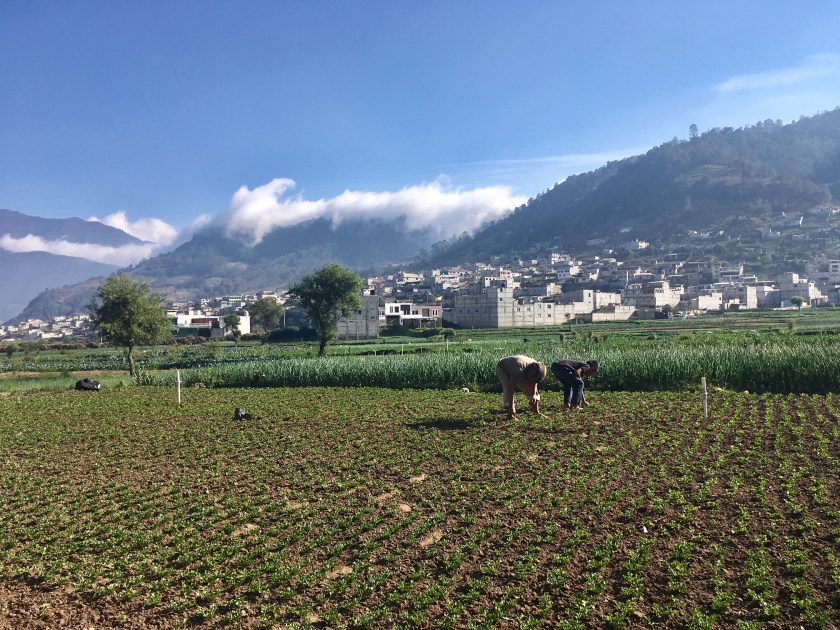
Plot after plot of land was neatly sectioned off by farmer and crop: Vegetables such as carrots, onion, garlic, radishes, lettuce, and leeks were sprouting up through the earth, and barefoot farmers with weathered faces and warm smiles were tending to them. We meandered aimlessly taking in the scenery for a couple of miles, and every time we passed someone working the fields we would greet them with a friendly Hola, buenas tardes! One such farmer stopped what he was doing to come chat for a moment.

Carlos was curious to know our story: Where we were from, what brought us to these parts, how we were enjoying Guatemala, what local dishes have been our favorite so far, and where we learned to speak Spanish. When I told him that I was from San Francisco his face lit up. Standing in a field deep in the highlands of Guatemala, our conversation quickly turned to the glory of California.

He had lived there for many years as a farmworker outside of Santa Cruz and Sacramento. He talked of the beauty of the beaches of Santa Cruz, and how many different parts of California are so beautiful in their own way–the beaches, the farmland, the redwoods. I agreed wholeheartedly with his praise, and we smiled over the shared knowledge of how special California is. Carlos has grown children in the States and hopes to return again someday, but for now he has to be here.

I motioned to the scenery around us, the verdant farmland that gave way to a border of misty mountains and volcanoes, and pointed out that it’s just as beautiful right where we stood. He beamed with pride, and then asked Le gustan cebollas? Of course, I love onions! I told him. He held up a finger to indicate that he would be right back, and ran off to his field.

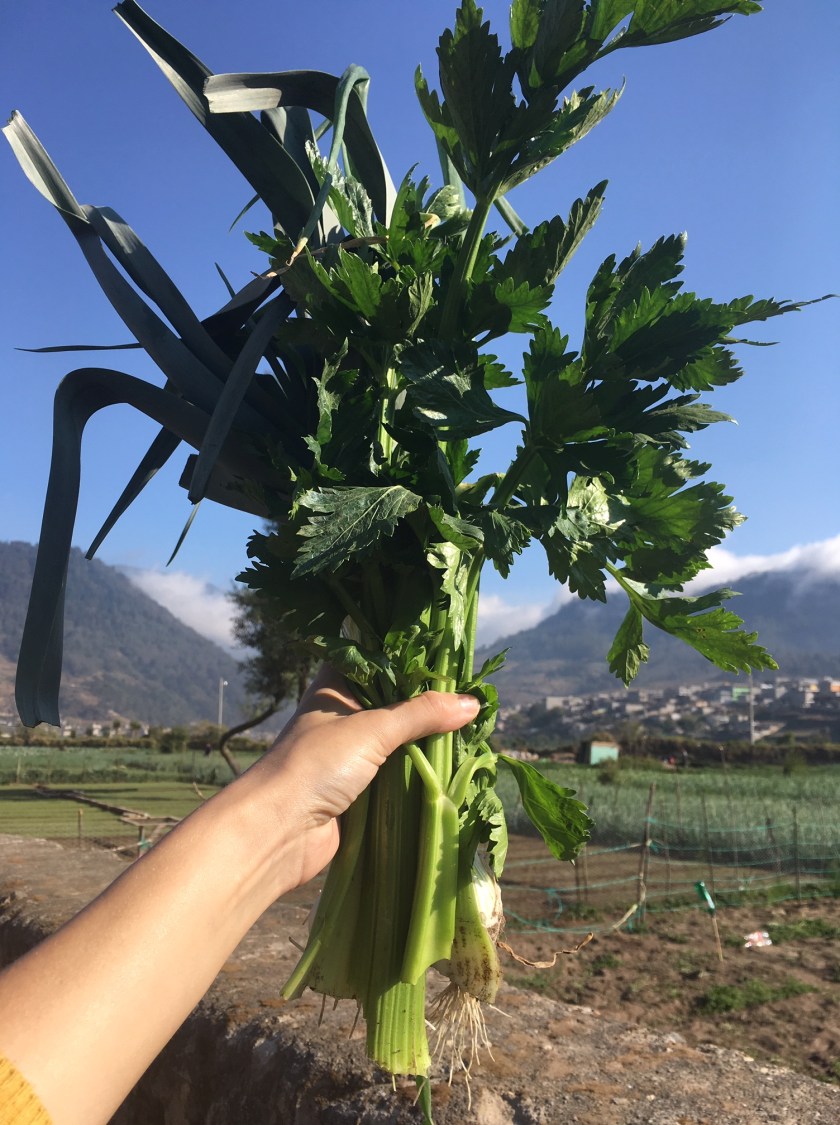
By this time a tiny woman in traje típico–traditional Mayan clothing–had come over from the farmhouse with a styrofoam cup of fresh atol de elote–a warm corn milk beverage–for us to share. Carlos returned with a beautiful bouquet of vegetables for each one of us, including onion, leek, and celery, and we thanked them profusely for their generosity.

The friendliness and hospitality they showed to perfect strangers just passing by warmed my soul, and I was grateful for the instant bond our love of California had provided. They wished us well, hoping we would enjoy the rest of our time in Guatemala, and we waved our goodbyes. I walked away admiring my vegetable bouquet and smiling to myself about our connection and the inherent goodness of humans all over the world.

The Chicken Bus Connection

Later that afternoon when we were done exploring and ready to head back to Xela with our vegetables, we hopped on another chicken bus. After taking a seat in the back of the bus I noticed a man start down the center aisle, panhandling with a small plastic bowl of change. He appeared to have survived some kind of terrible fire, with taut silvery-pink scarring covering his face, head, neck, and arms. The flesh of his nose and ears had been burned away, as well as most of his fingers.

I reached into my purse to fish out a few notes, and when he arrived at our row I placed the quetzales in his dish. In a moment that left me completely stunned he asked me–in perfect English–Do you speak English?

This is an area where VERY few people speak any English at all–not even the college educated teachers and administrators at the Spanish schools, whose careers center around working with English speakers. In Xela it is very uncommon, and hearing it out here in rural Almolonga from a man panhandling on the bus was even more surprising. Megan and I were the only foreigners on the bus, and I hadn’t expected a word of English on the trip.

I told him Yes, I speak English–I’m from California. He asked if I had ever heard of a place called South Carolina, and I smiled and said Why yes, I am quite familiar with the state.

He told me that when he was a little boy, after the fire, a missionary pastor from South Carolina had brought him back to the States for medical treatment. He ended up living there for 12 years with the pastor’s family, getting therapy and an education. He asked, Have you ever heard of Greenville? I laughed and said Yes in fact I have, an old friend of mine is from Greenville and I spent some time there years ago. It was now his turn to be completely surprised–he couldn’t believe that I knew Greenville! We chatted for a little bit about South Carolina while other curious passengers looked at us with cocked heads, probably wondering what on earth the two of us had to talk about.

He had to get off the bus at the next stop, and I was left both in wonder of my double Small World day and heavy-hearted with unanswered questions about the reasons why he was back here in Guatemala, panhandling on a bus to get by. I would think that his fluency in English would be an asset in employment of some kind here, but I also wonder if he is discriminated against because of his painful-looking scars…I will never know, I can only wish him well and wonder about him from time to time.

The Small World coincidences I had in Almolonga that day made me reflect on just how many invisible connections there are between us all, waiting to be discovered. Encounters such as these are delightful little reminders of our shared humanity and shared space of world that can feel so vast and disconnected–but isn’t. If we commit to moving through the world with open hearts and open minds–if we take the time to talk to one another–we can make visible these connections between us, and we can stand together smiling on common ground.

Behold my beautiful bouquet!
Carlos and his son at work.

Clase de Chocolate

Mesoamerica is the birthplace of chocolate, and for thousands of years cacao has been revered in Mayan culture as a food of the gods.

Historically chocolate was consumed as a bitter drink, made by grinding fermented cacao beans with chile pepper, cornmeal, and water and mixing it until frothy.

Today the imperialistic influence of the sugar cane industry has made its mark on how cacao is consumed, and while many Guatemalans still drink it as a beverage it is mostly made sweet. The cacao beans are ground with sugar and other ingredients such as vanilla, cinnamon, or almonds.

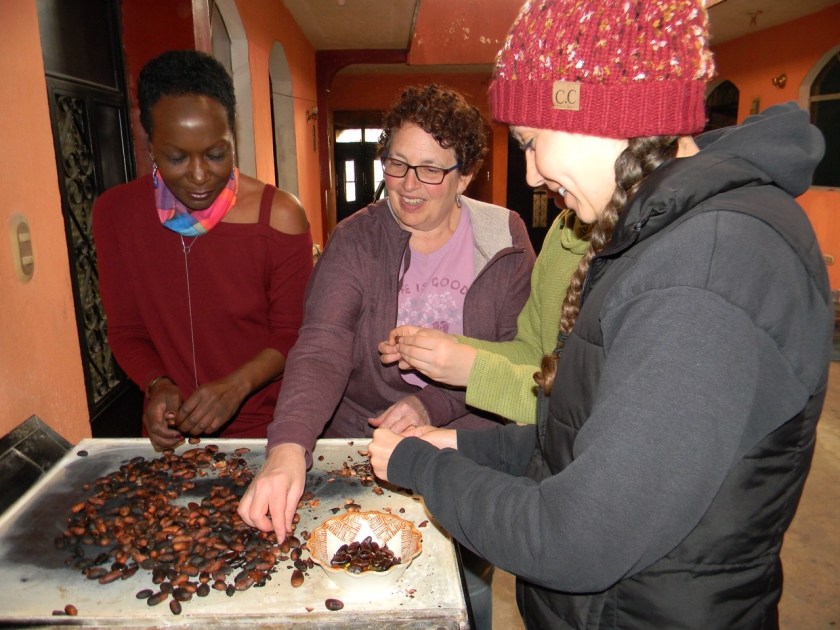
I was recently able to go to the home of a local K’iche’ Mayan woman to learn about the traditional process of turning cacao into chocolate–a delicious way to spend the afternoon!
Here’s how it went:

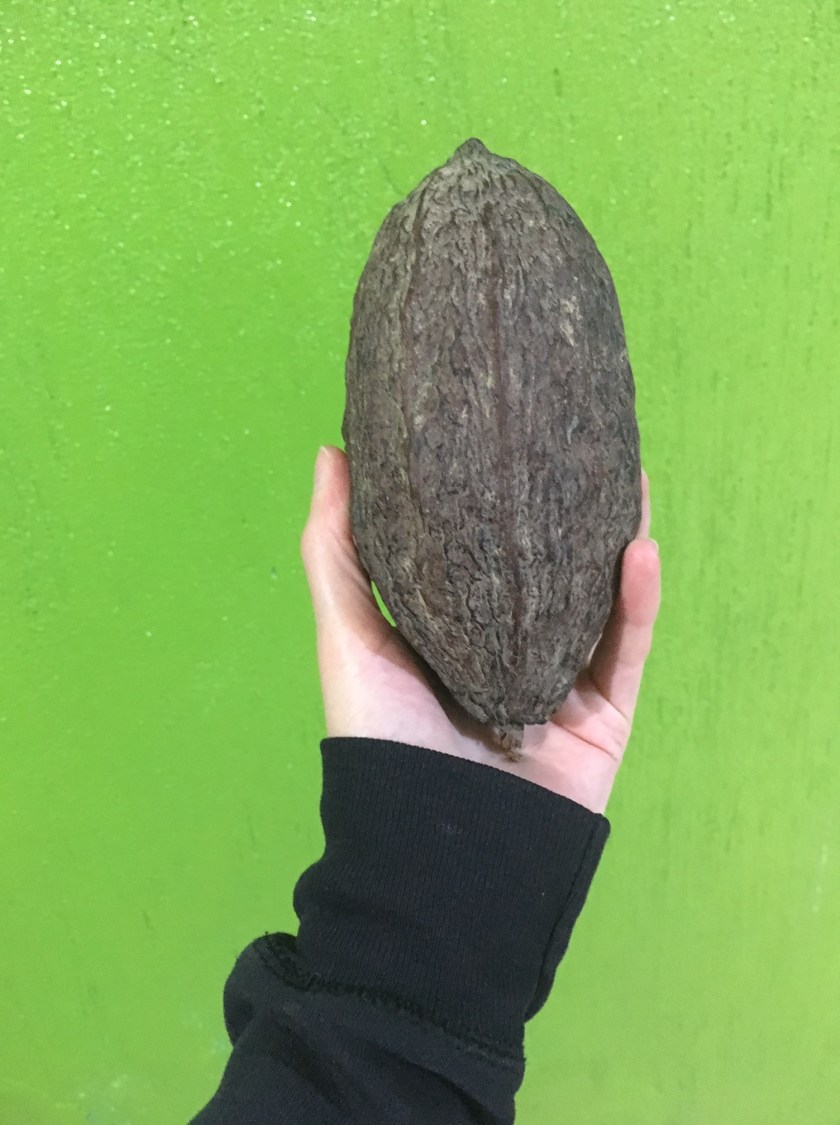
The lovely cacao pod.

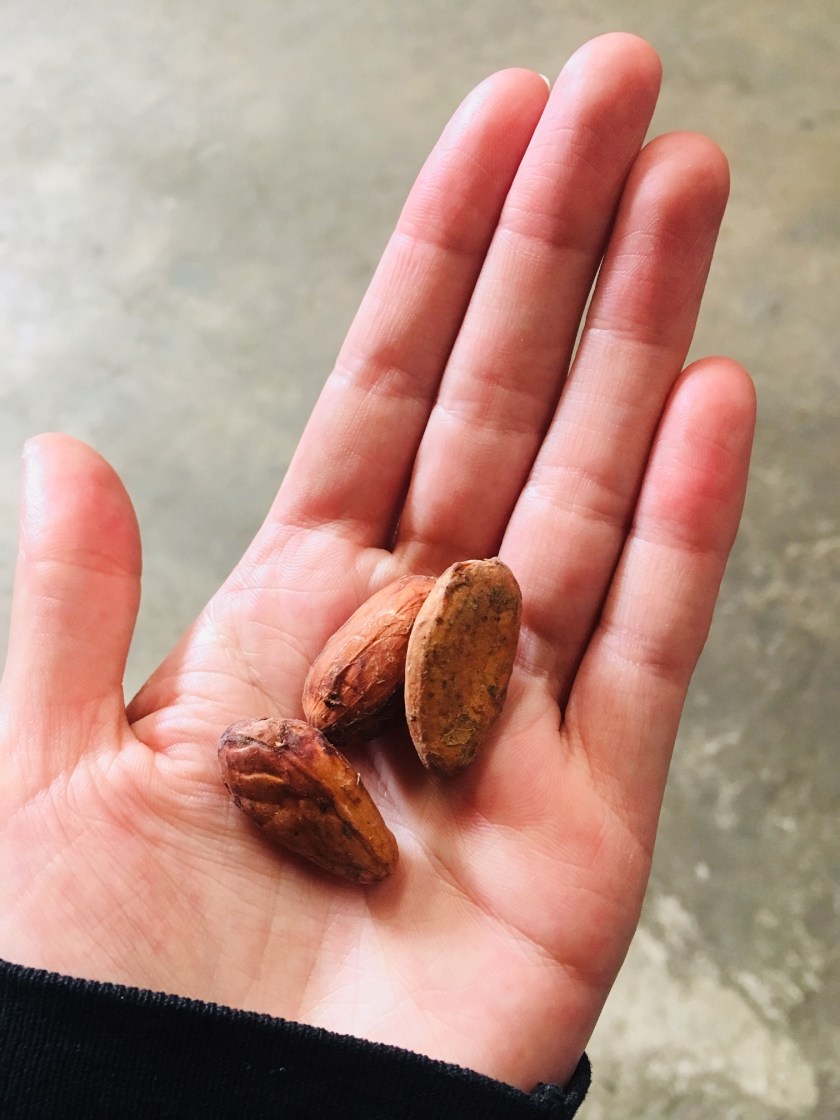
Cacao beans, after a few days of fermentation.

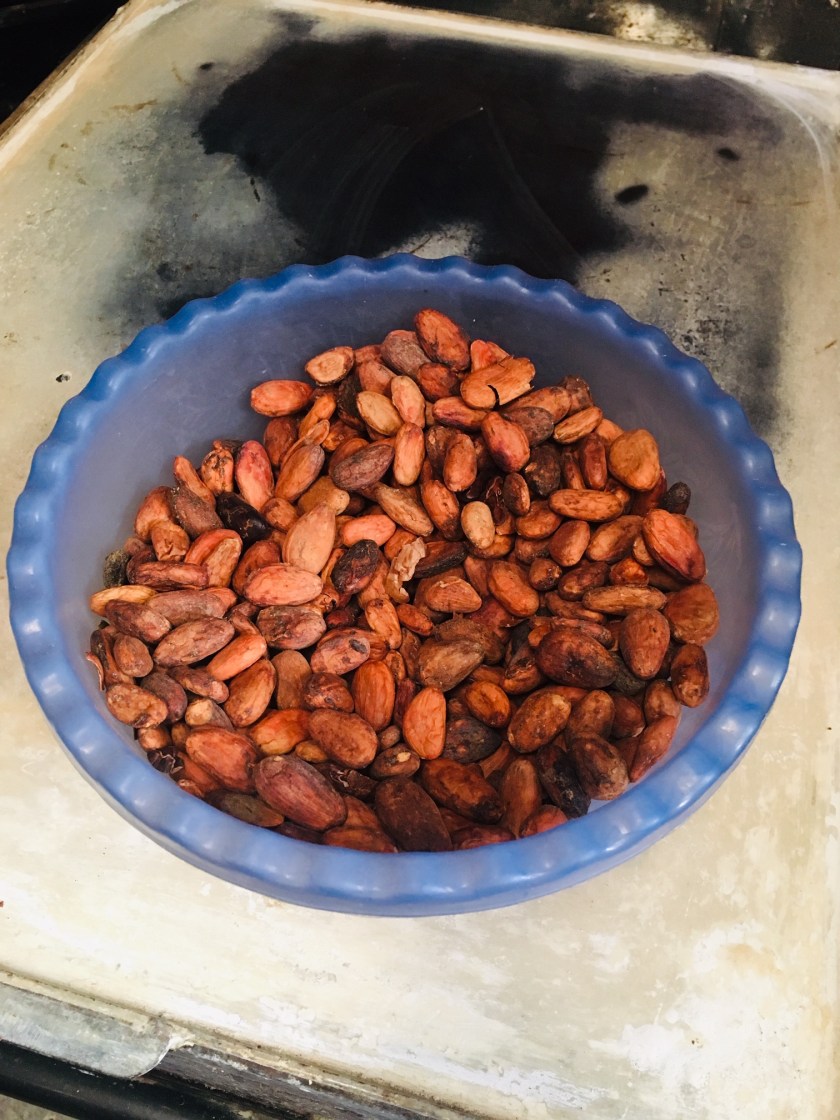
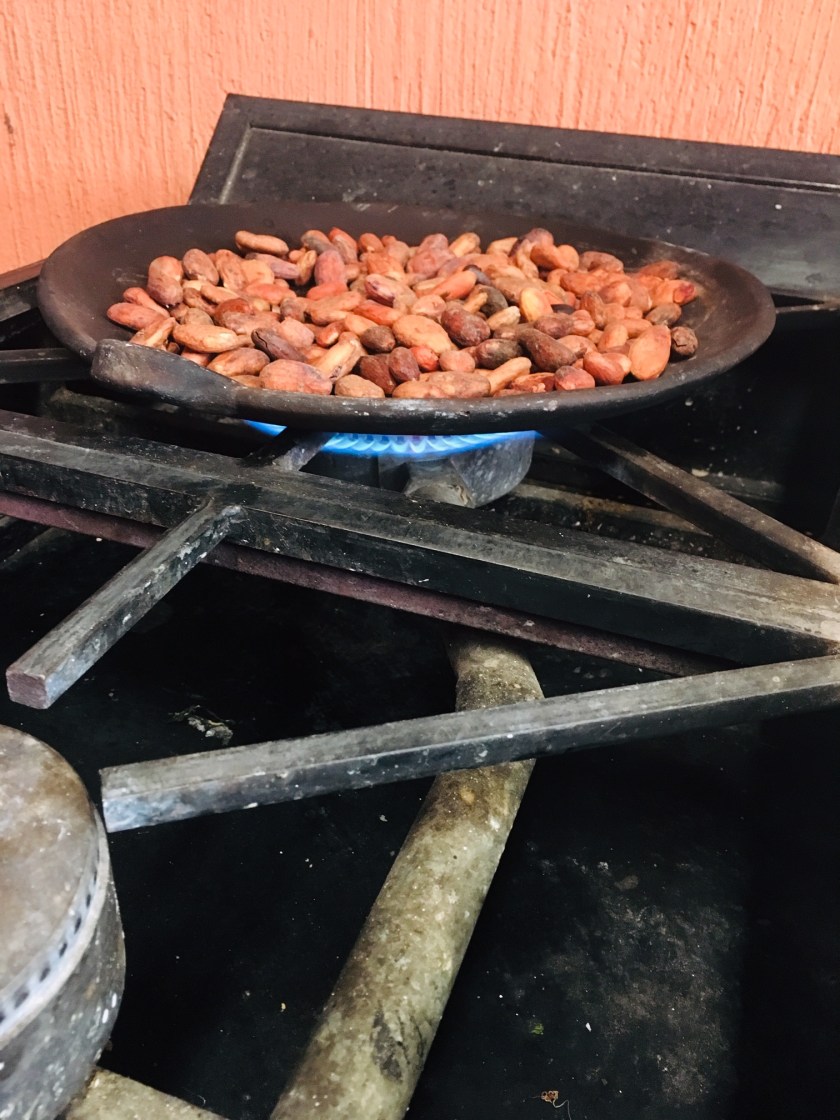
Bowl of cacao beans, ready for roasting.

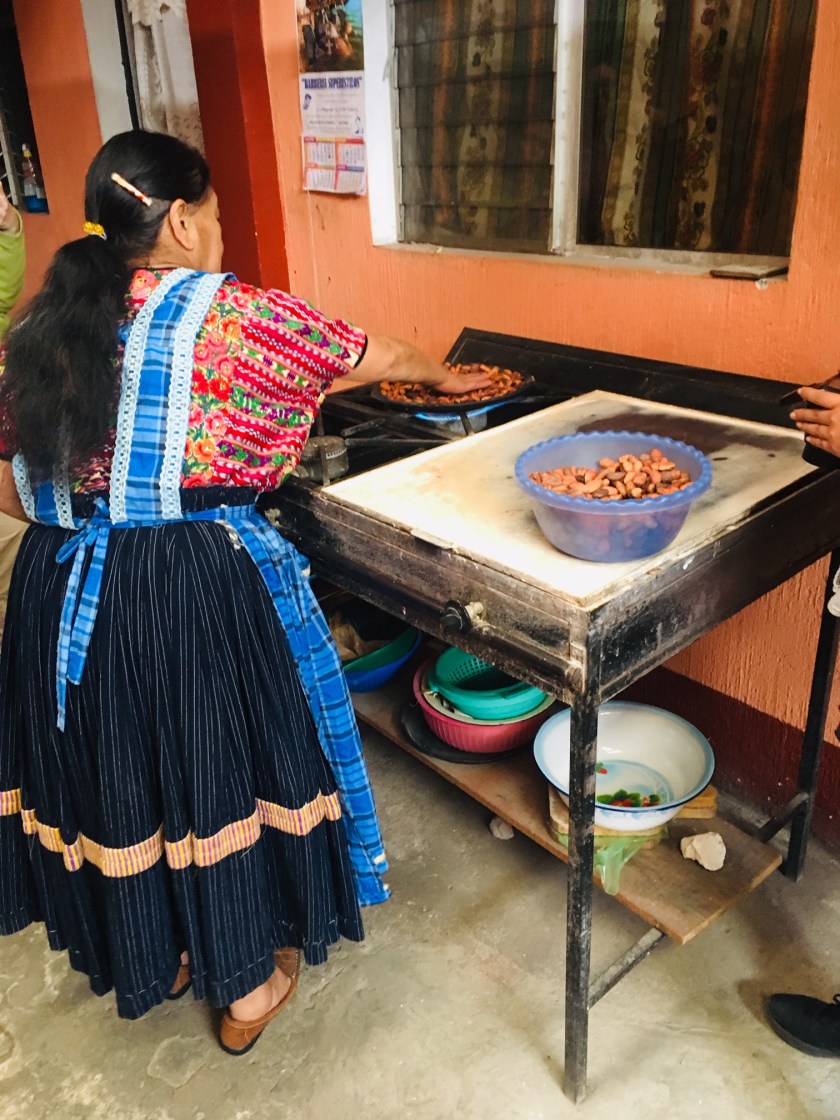
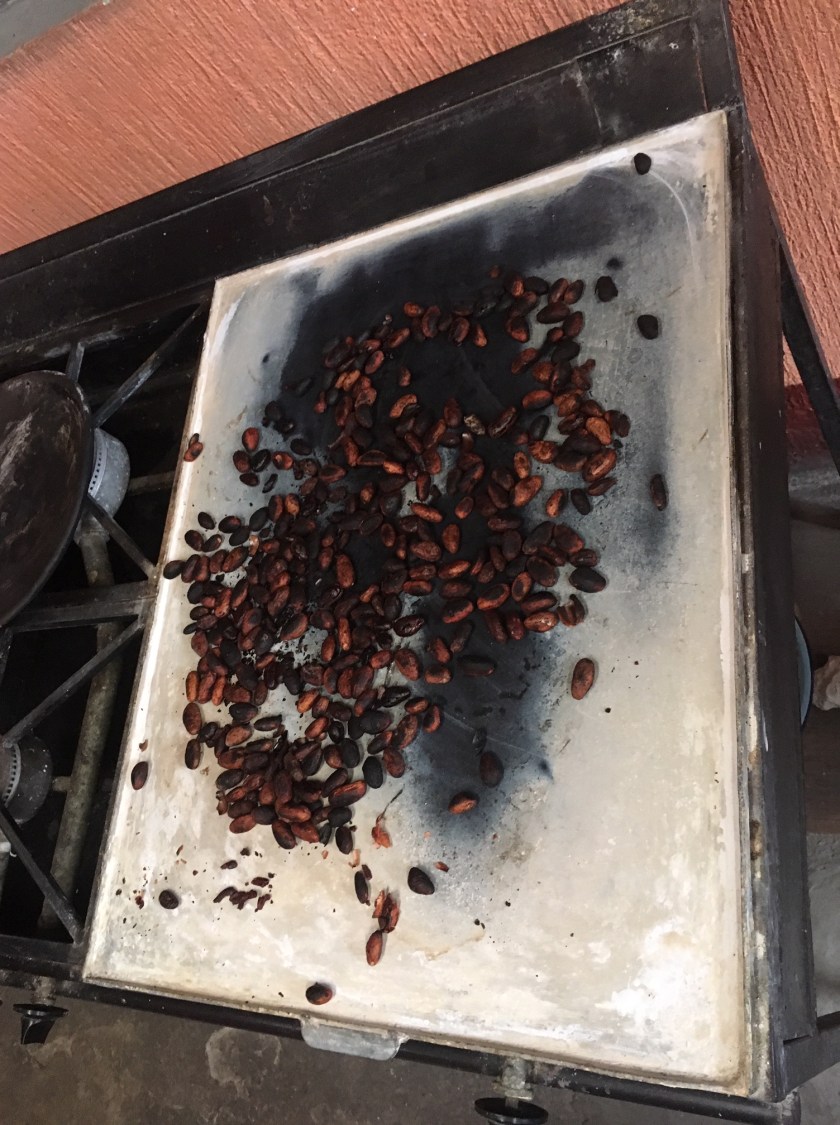
The beans are roasted over the flames for about 10 minutes.

You know they’re ready when they snap and pop a bit like poporopos–popcorn (How fun is that word?)

After they are charred they are laid out to cool.

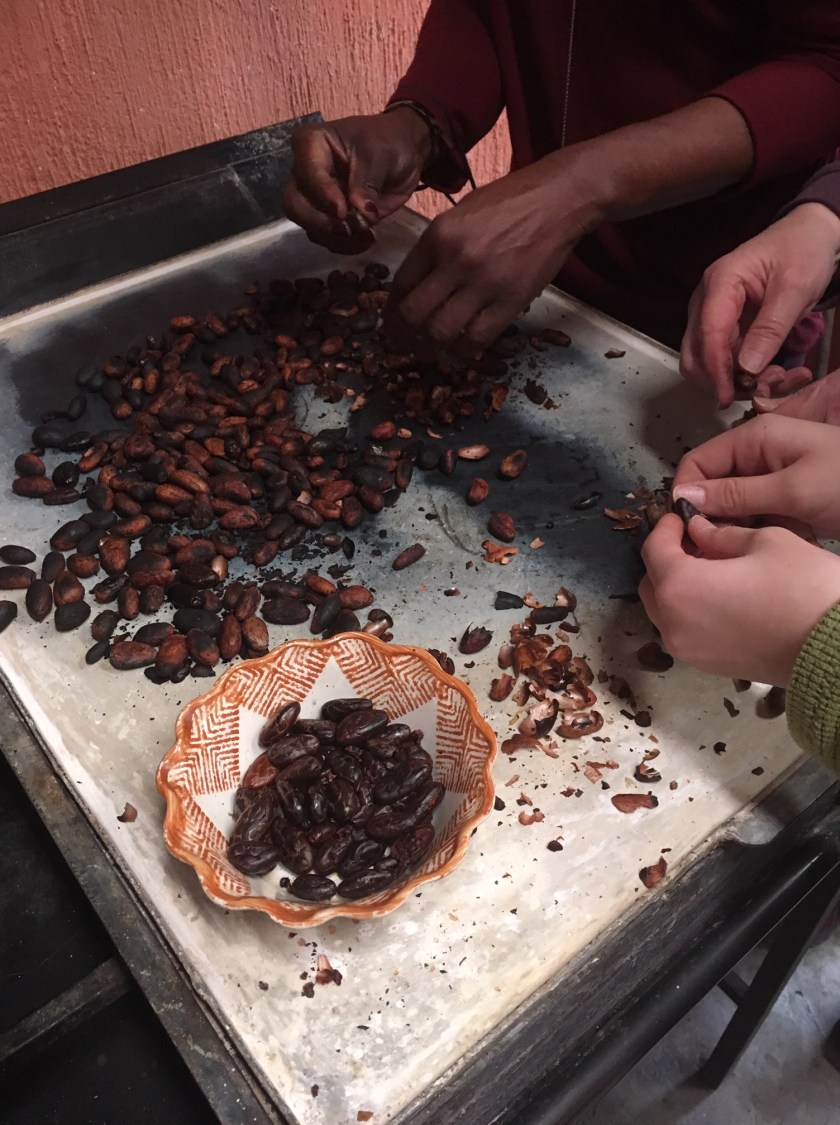
Next is the time consuming process of peeling off and discarding all of the husks by hand.

Peeling the husks.

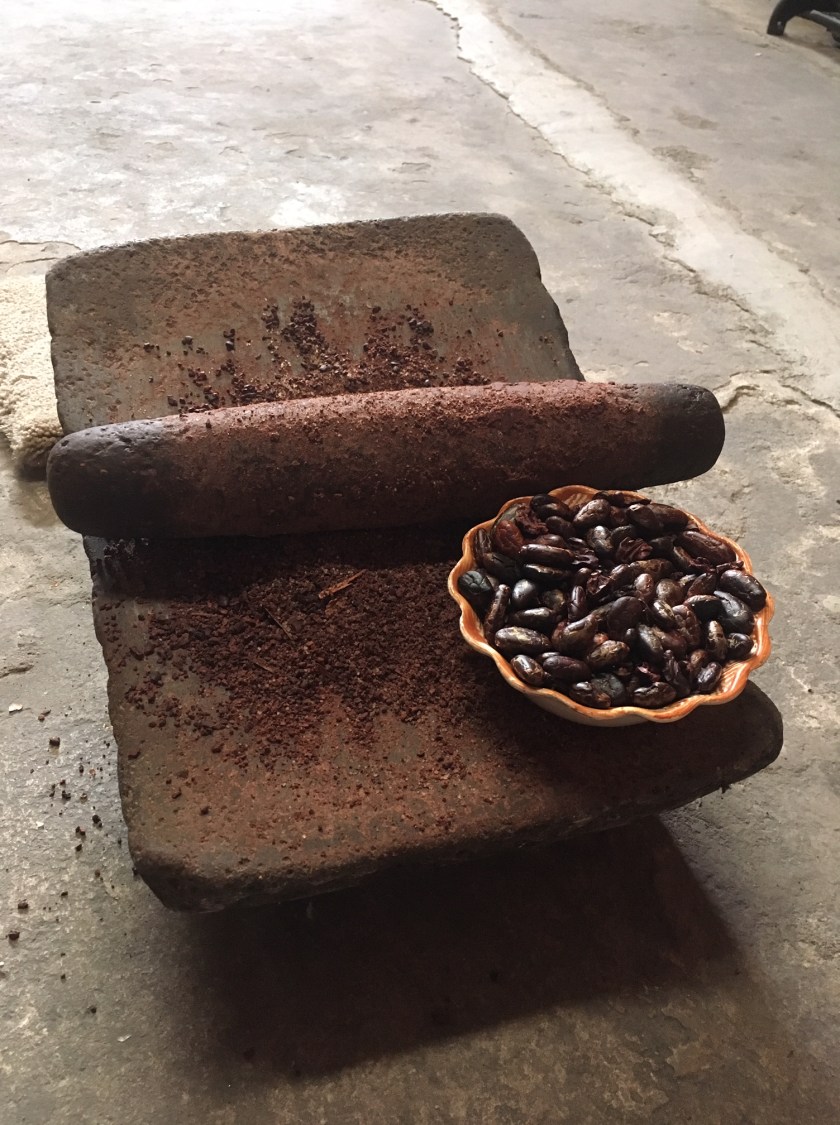
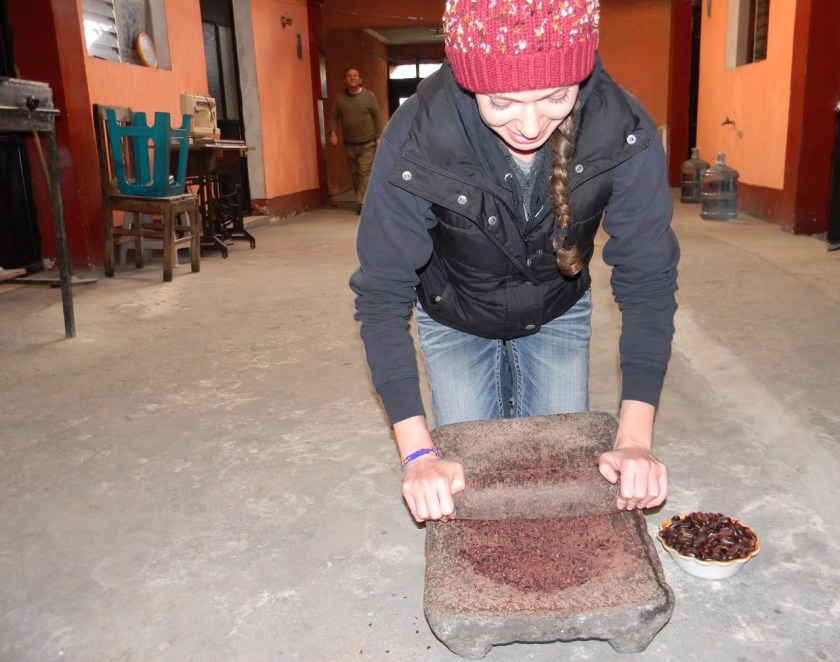
The metate, or grinding slab, is used to grind the unsheathed cacao beans into a fine texture.

After the cacao was fine we added vanilla bean and a touch of sugar, and ground it all together until it became a paste.

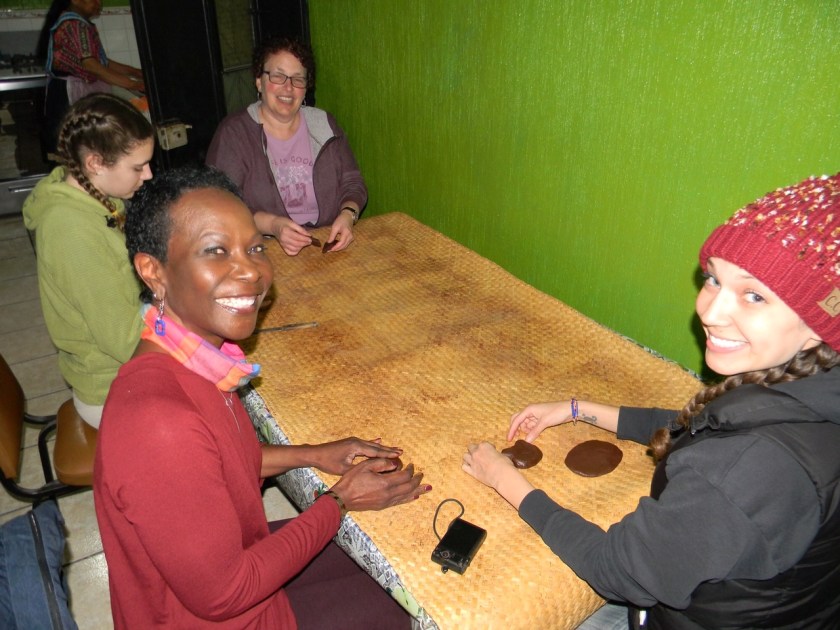
Next it’s shaped into patties and allowed to dry.

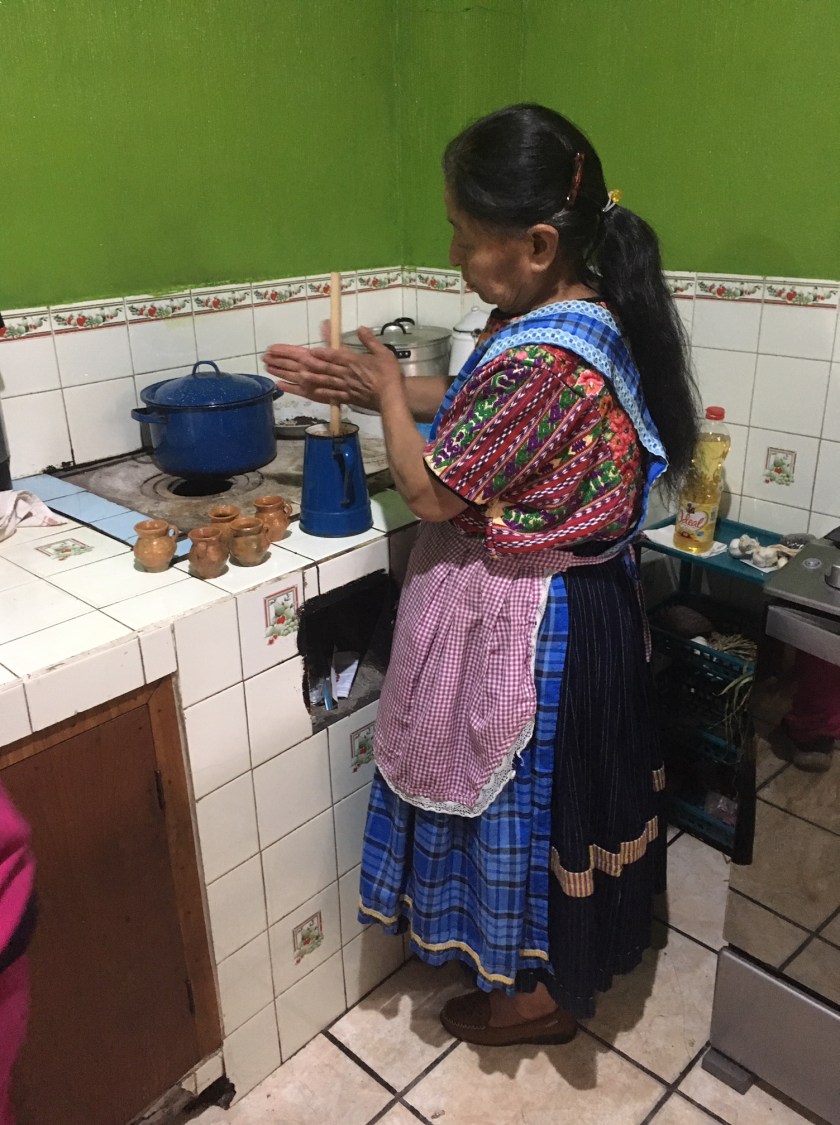
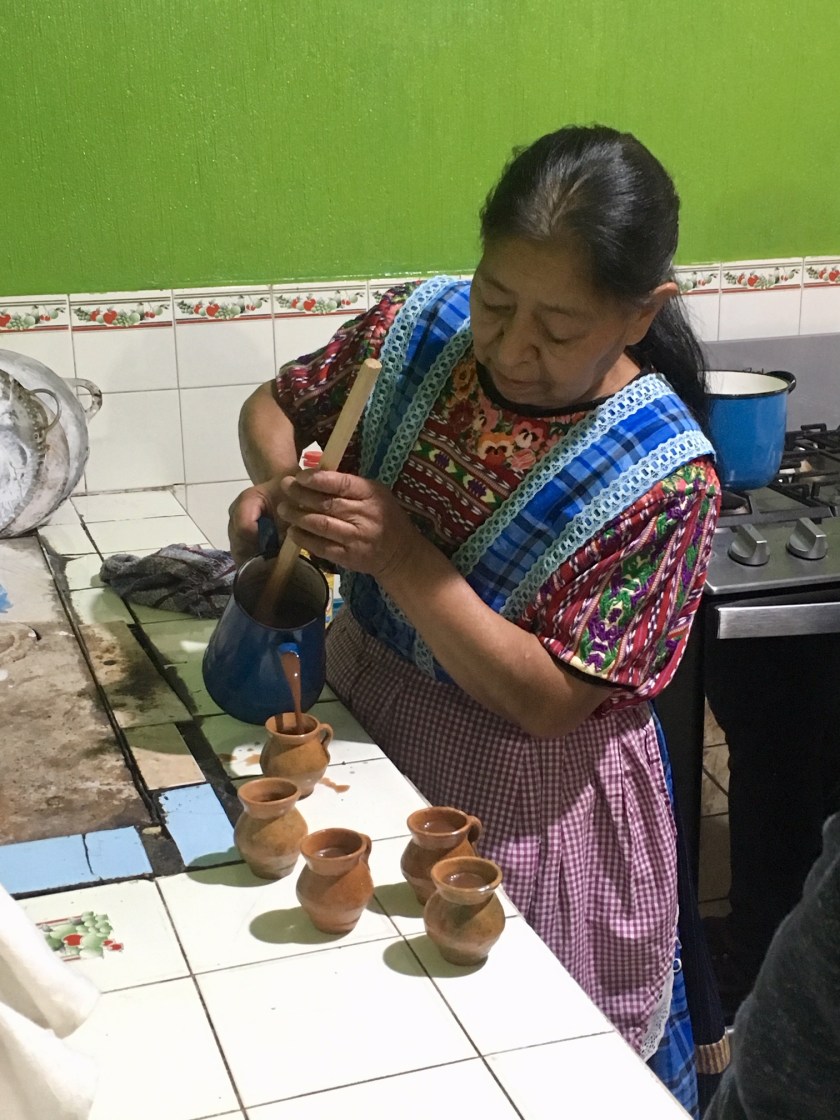
The drink is made stovetop by melting the chocolate patty and water, and frothing it to a creamy texture with the wooden dowel. Milk can be used as well.

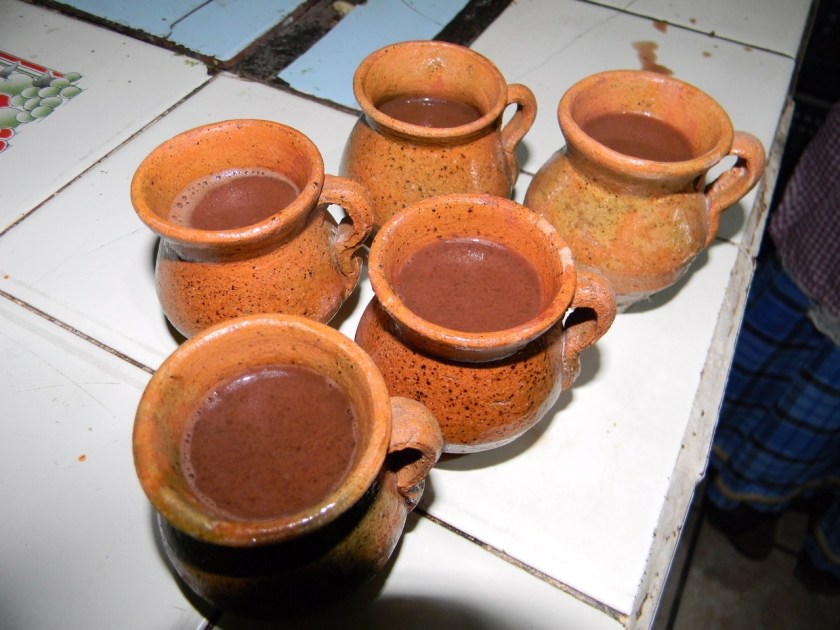
The drink is served piping hot in these little ceramic mugs.

The final product. One of the most heavenly substances I’ve ever tasted. Rich, pure chocolate with just a hint of vanilla and sweetness. Bottoms up!

XELAJÚUUUUUU!

I somehow made it through 34 years of life without ever attending a soccer game, and I’m pleased to report that streak was broken here in Guatemala.

Last week Club Xelajú played their biggest rival in the national league, the Comunicaciones from Guatemala City. It was a home game at the stadium here in Xela, and since tickets are GA we chose to sit in the rowdy section behind the goal with all of the superfans.

People belted out Xela’s many cheers and fight songs all night long at the top of their lungs, while waving around sketchy renegade sparklers and rainbow smokebombs. Drumbeats, noisemakers, and plenty of colorful expletives pierced the night sky as well, and taken all together the energy in that place was electrifying.

Xela was the underdog, but home field magic worked its wonders that night and Xela won 2-0! It was by far the most fun I’ve had at a sporting event of any kind.

Check out these videos for a little taste of the energy!

GOOOOOOAAAALL! Shirts off after Xelajú scores. Mind you, it was 50 degrees out.

Everyone going wild, and inexplicably lots of banners with Simpsons characters? Not sure what that’s all about, but I dig.

Smells like team spirit!

The Micho and Margarita

Tía Margarita

Before heading off to bed on the very first night of my homestay, Catalina stopped me in the kitchen and asked me if I had tapones para los oídos. Not knowing the word for earplugs yet I must have looked confused, because she began animatedly miming stuffing her ears with plugs. Ahh, yes yes, I have earplugs I told her…but why?

She began telling me that Tía Margarita is 83 years-old, very poor, and very sick. She has bad arthritis, a bad heart, and a big mass in her abdomen–but she can’t get an operation. There’s nothing the doctors can do she says. She has nobody in her life, only one niece who doesn’t care, and so Catalina lets her live here and takes care of her. (I later learned that Margarita is a distant relative of Catalina’s ex-husband, not a close relative of Catalina’s.) Catalina told me she’s in a lot of pain all night, and recommended I use my tapones. Still slightly confused and wondering if I was understanding the situation correctly, I headed back to my room.

So began the first of many sleep deprived nights. Margarita and I have adjacent bedrooms, and there are about 10 inches of open space beneath the ceiling so that all sound carries between our rooms. Her afflictions often keep her up all night, and the sounds of her suffering are incredibly soul-wrenching. She whimpers, cries, and struggles to get a good breath. She murmurs prayers and pleads with God. She pants and moans in pain. All night. Her tortured sounds seep past my tapones and into my subconscious and give me dark, fitful dreams.

After my first few nights I was drained and doubtful that I could stay living in that room, to bear witness night after night to this poor old woman’s suffering without being able to do anything about it.

Micho the Cat

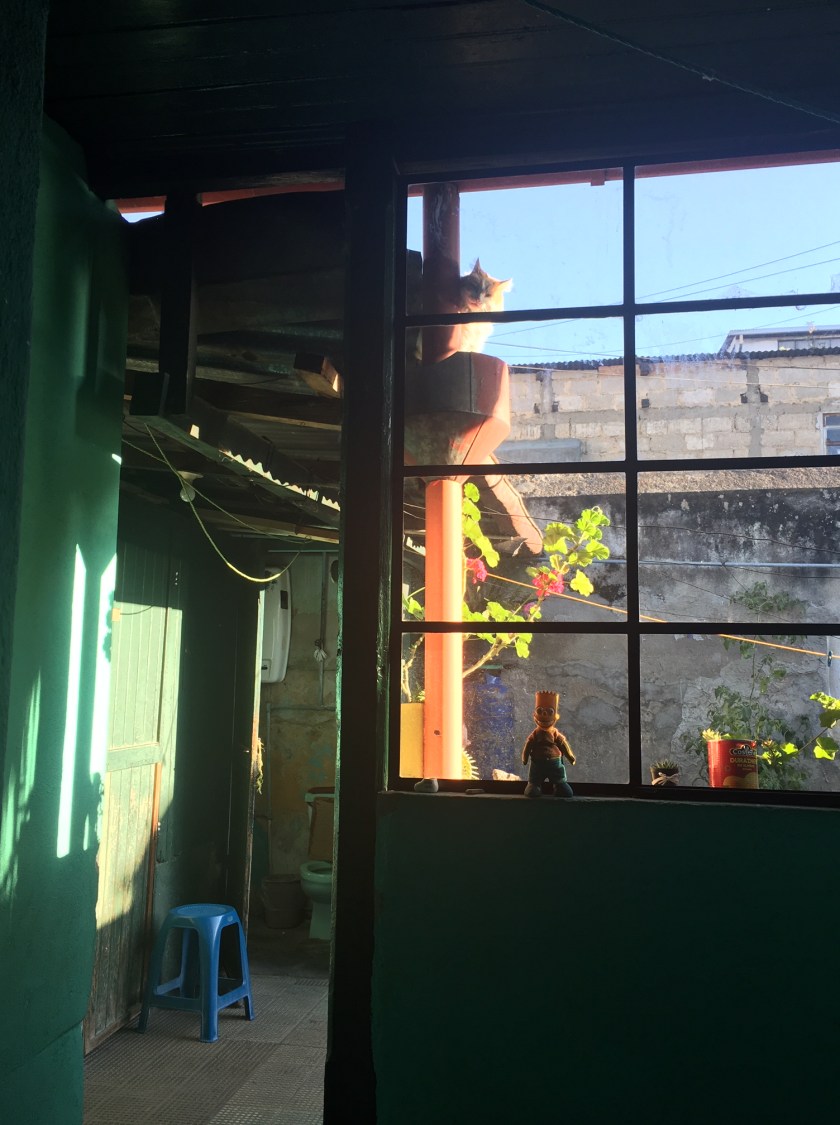
Daytime with Margarita is a different story–it is often still punctuated with pain, but another much more lighthearted part revealed itself to me within my first few days of living here. He has four legs and a fluffy tail and goes by the name Micho.

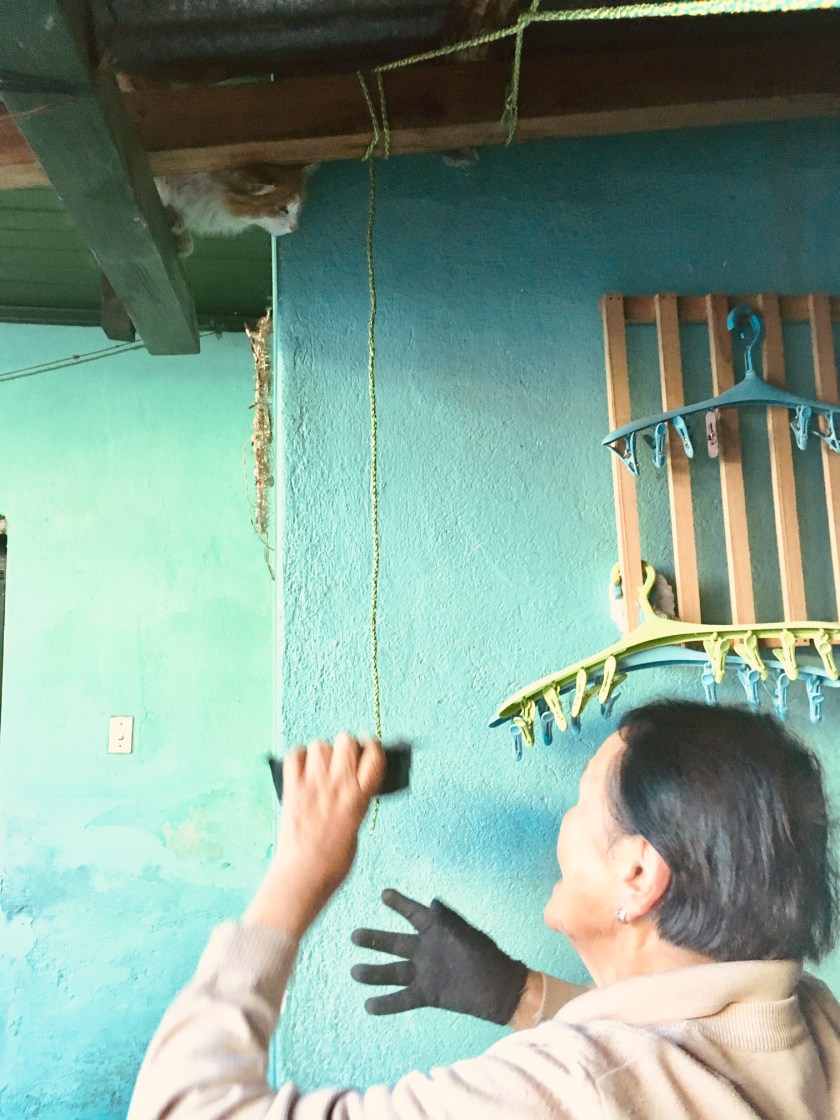
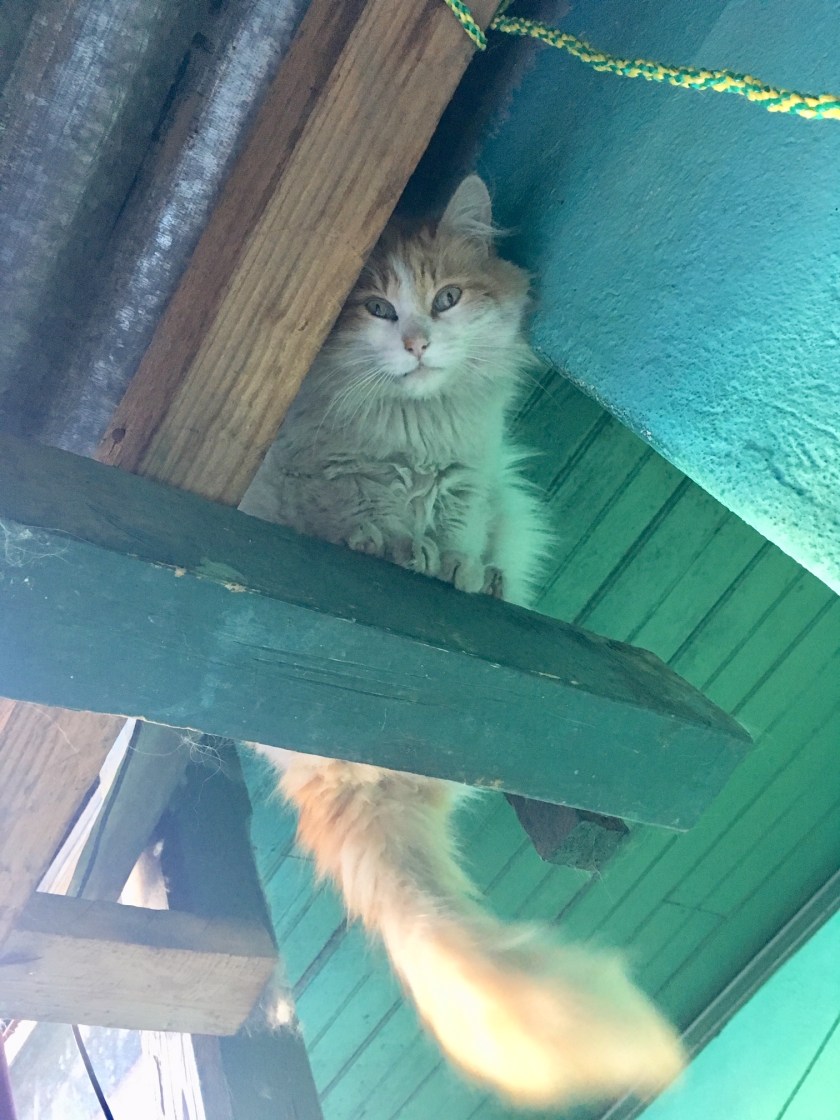
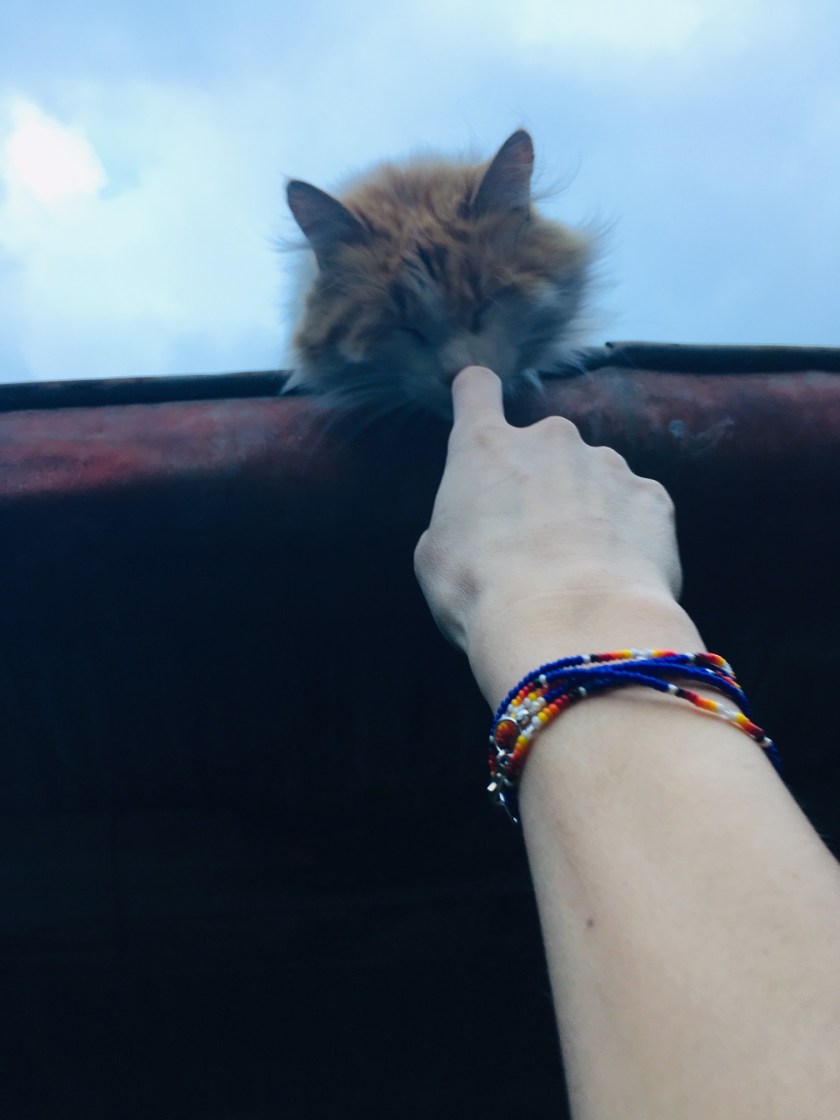
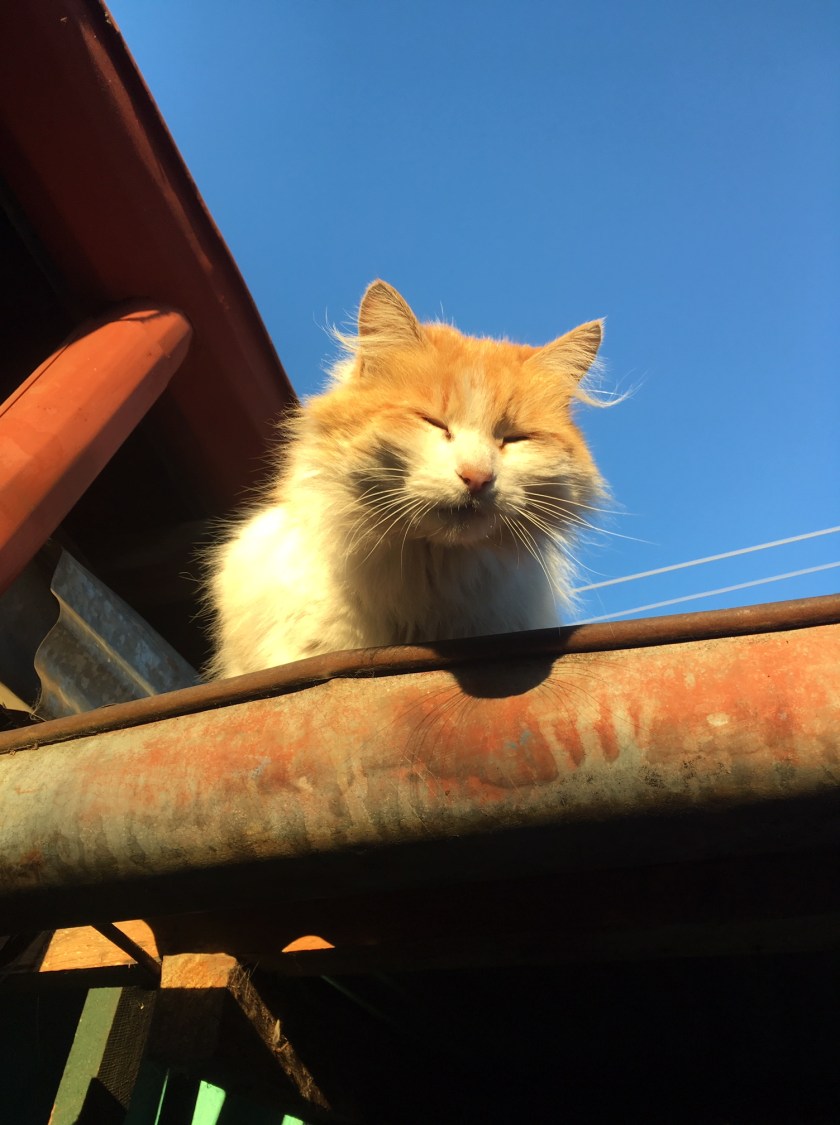
In Xela there are many stray cats who live on the rooftops in order to steer clear of the packs of dogs who dominate the streets. Micho is one such cat, a handsome albeit scruffy orange and white male. He comes to our rooftop over the courtyard twice daily and loudly announces his presence with his raspy meows, waiting for his friend Margarita. Over time I pieced together that he’s been coming like clockwork for many years but stays on the roof, because Catalina keeps things tidy and has disdain for street animals with their pulgas–fleas.

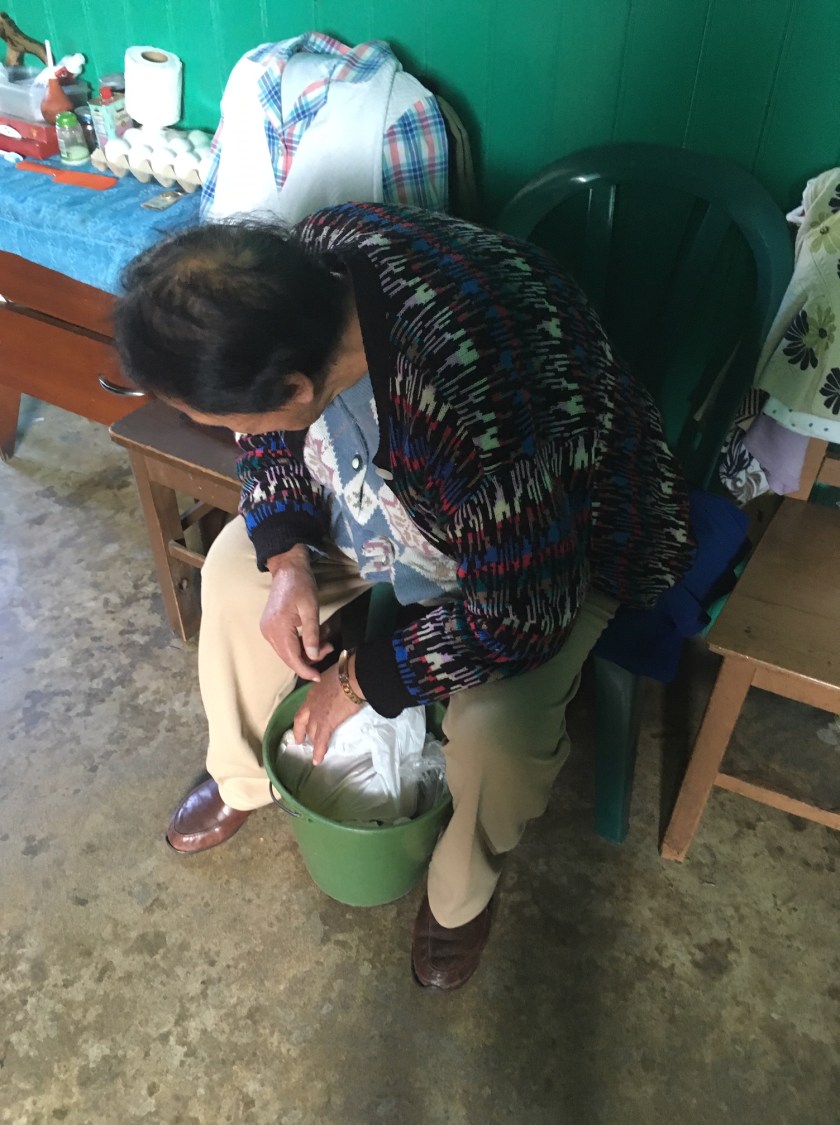
Yet every day, in defiance of Catalina’s disdain, Margarita spoils Micho. She keeps a plastic bag of fried chicken tied tightly beneath a chair in her bedroom, and when Micho comes meowing he gets a piece of chicken tossed up on the roof. Each evening he also gets a tray of kibbles which she wedges in a special spot under the awning between a wooden post and the outside wall of the house. If Micho is lucky, he also gets treated to chicharrones from the market.

When Margarita noticed my delight that a kitty was coming to visit, she immediately began requesting my help. I was pulled into her routine as an accomplice in caring for Micho, and a sweet friendship began to grow between us each day over our shared love of animals.

Margarita will knock softly on my door when Micho comes meowing and beckon me to join her while motioning Shhhh with a finger over her lips. She’ll ask me to stand guard looking down the hall to see if anyone is coming, or she’ll have me be the chicken tosser since she’s so easily winded. The one activity that she typically refuses help with is wedging the kibble tray–she wants to be the giver of this gift. It gives me anxiety to watch this tiny old woman with major mobility issues teetering up on a step stool, but I understand her need to accomplish this one task that brings her so much happiness.

One afternoon early on I asked about the name Micho–was it a common name for people here? She burst into laughter and said No, no, no. I asked her for the spelling and looked it up on my SpanishDict app, and burst into laughter myself–Micho means pussy! He also goes by Mich (pronounced meesh) for short, our friendly little neighborhood puss. It’s perfect.

Though it’s still very difficult to share in Margarita’s pain every night, my doubt that I could stay in our close quarters soon dissipated with the blossoming of our friendship–in life you always have to take the light with the dark, and by now I wouldn’t trade spaces for anything.

The Courtyard Convo

Margarita also saves bread for the birds, her precious pajaritos, and each afternoon she slowly hobbles out back to lovingly spread crumbs about the courtyard. The other day I was surprised and amused when she reached up her shirt and rummaged around for a dinner roll she’d been saving for the birds, then presented it to me to go crumble because her knees hurt too much to do it herself.

Once our animals friends are fed she’ll sit down on her plastic stool in the warm sunshine and we’ll admire them while they dine. Her musings usually go the same way: Aren’t they precious? Aren’t they beautiful? How could anybody not want to feed them and care for them? Jesus tells me to care for them. It’s very important. And how could anyone not want to? They’re just so beautiful! We care for them because our hearts are good, not bad.

Every day I agree with her on each point, and we smile at Micho and the birds eating with gusto. Her whole face softens and lights up with joy, and it reminds me of how powerful something so simple can be: when you choose to spread love to others you share in that glow as well, no matter how much pain you carry yourself.

Dementia and her Demons

It didn’t occur to me right away that we were having the same conversation each day in part because of her dementia, but that information came to light at the dinner table after about ten days of our daily routine. It was a bit of a face-palm moment for me–of course she has dementia, Annie–but it had gone undetected in my mind because to me gushing about animals day in and day out is standard. Once I began looking at Margarita’s behavior through this new lens, other aspects of her dementia began to come into focus.

All through the night, in addition to her pleadings with God to stop her pain, she has what sound like fever dreams. She carries out frightened, mumbling conversations with the people who haunt her hallucinations, sometimes crying out in terror.

Last week she let out a blood-curdling scream, and I threw off my covers and ran into her room. Mi mano, mi mano, mi mano she cried, tossing back and forth in her bed. With my cellphone flashlight I frantically looked at the hand in question, thinking perhaps a spider or insect had gotten her. There was nothing to be seen, and Catalina came bursting in the room relieving me of my duty before I could ascertain what on earth had happened to her hand. The next day I learned that she hallucinated that a bad man was in her room standing over her, and he had grabbed her by the hand.

After this incident Catalina moved Margarita’s bed down the hall into her room, fearing that Margarita’s problems were too much for me to be dealing with. I felt really bad about this, because Margarita still lingered in her bedless room late into the evenings, nodding off while slouching in a plastic chair with a blanket around her shoulders. This was her room, her space–she didn’t want to be in another room. After a few nights of noticing this I went and retrieved Catalina from the kitchen to show her how much Margarita wanted to be in her own room, and Catalina sighed Ohh, Margarita, and the bed was brought back into her room once again.

Beyond the hallucinations and short-term memory loss, she also experiences the depression and apathy that can come with dementia (and of course chronic pain as well). On most days she laments that she’s still living, and expresses the sentiment that she wishes for death with every possible combination of words: I just want to die. Why am I still living? I have too much pain, too much pain. I wish I were dead. I don’t want to be living anymore. Why won’t death come? Death is all I want, yet here I am alive.

Sometimes the wishes for death come off cavalier, bluntly matter of fact. Other times they’re conveyed with a dreaminess, a longing. She’ll show me yellowed photographs of her family and tell me how she can’t wait for death so that she can meet Jesus, and see her parents, her brothers, and her only son who died at birth. On one particularly bad day, when the pain was too much to bear, she crumpled into my shoulder and cried like a small, frail child, sobbing for death to come while I held her.

My heart has broken a thousand times over for Margarita, and admittedly I was not expecting a situation as intense as this to be a part of my homestay experience. I wish desperately that there was a solution to relieve her of her suffering, and I spend a good chunk of my days and nights worrying about her. But still I am incredibly grateful to have been placed here in this house. I’m grateful to be her next-door roomie and courtyard companion, and feel fortunate that I get to lend a hand to the one part of her life that’s still lighthearted and joyous. I’m grateful for the daily reminder of the capacity of the human spirit to spread love no matter what, to love in the face of intense pain and suffering. And I’m very grateful that every day without fail, in the midst of the madness and the sadness, along comes Micho and Margarita smiles.

The Micho and Margarita. Waiting not-so-patiently in his special spot for kibbles.

Sweet Mich.

Rooftop scritches.

Sunshine squints.

Margarita and the secret stash.

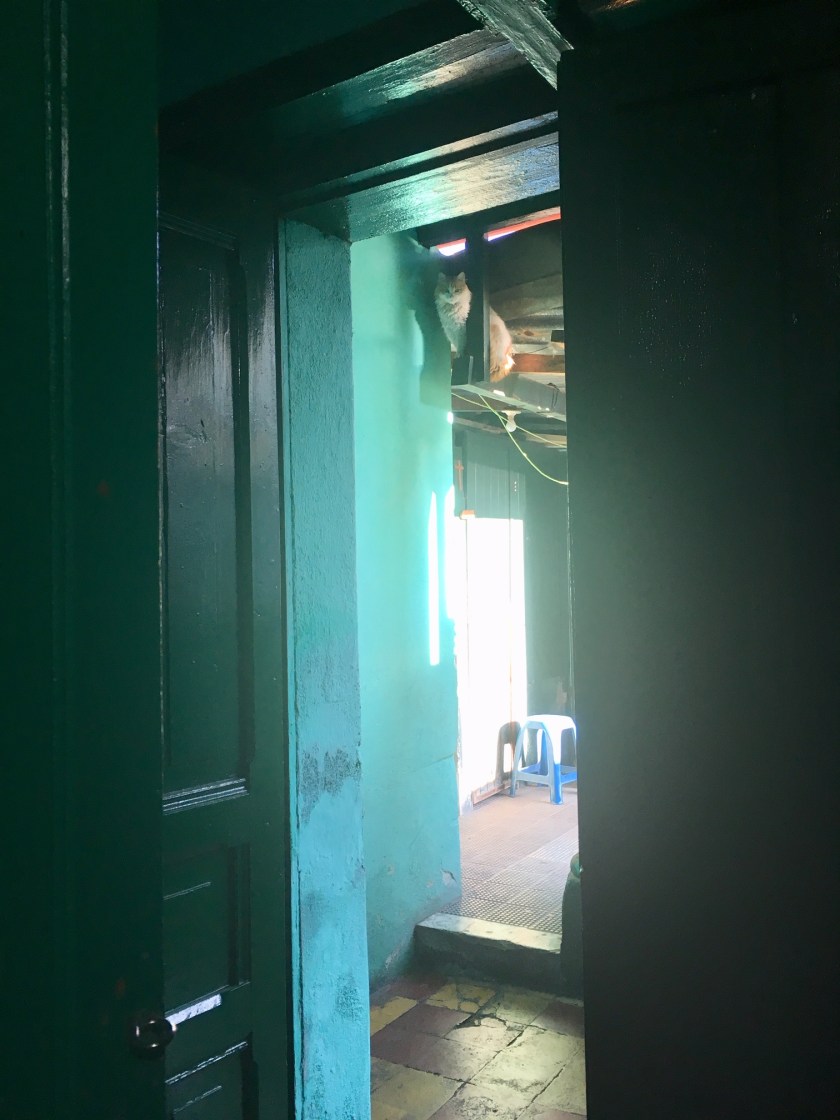
As seen (and heard!) from the doors to Margarita and my quarters.

Yooo-hooo, Margarita! Dónde estás?

Micho meows for Margarita.

Volcán Santiaguito Mirador

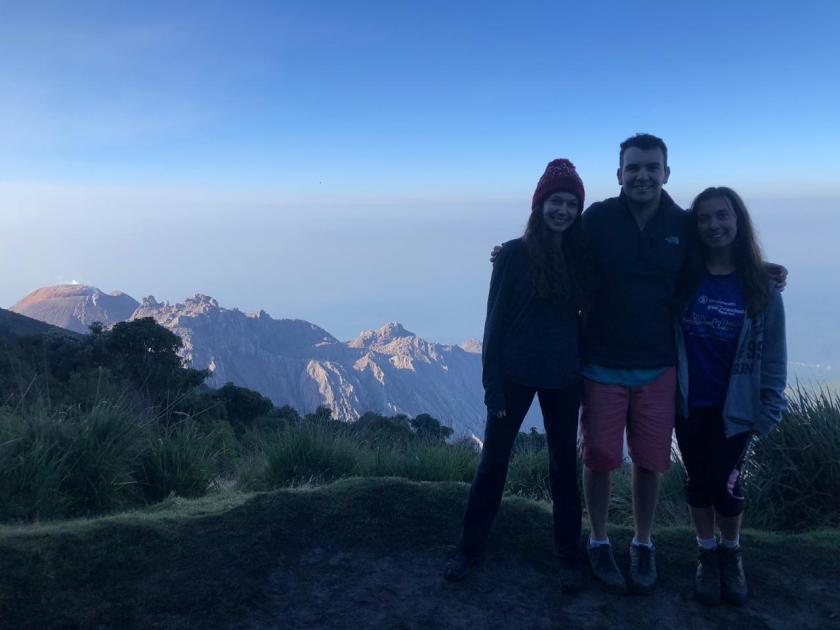
On my second day in Xela I met two lovely humans who are also studying Spanish at my school–Alex from LA, and Megan from England. They graciously extended an invitation for me to join them on a hike they had planned for that upcoming Sunday, to Volcán Santiaguito Mirador.

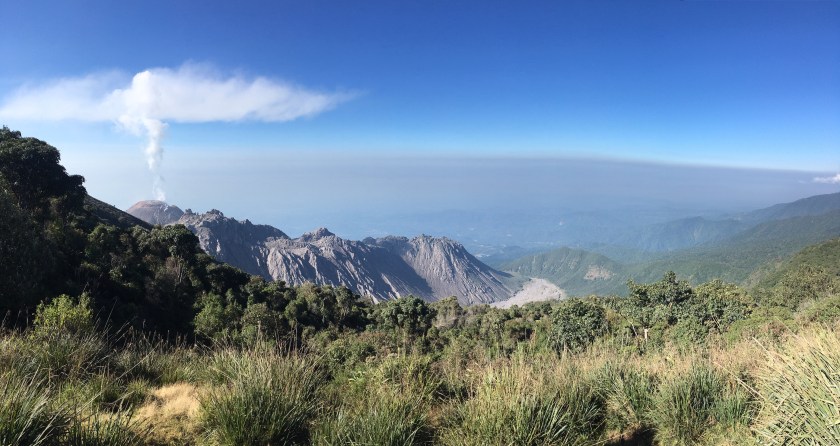
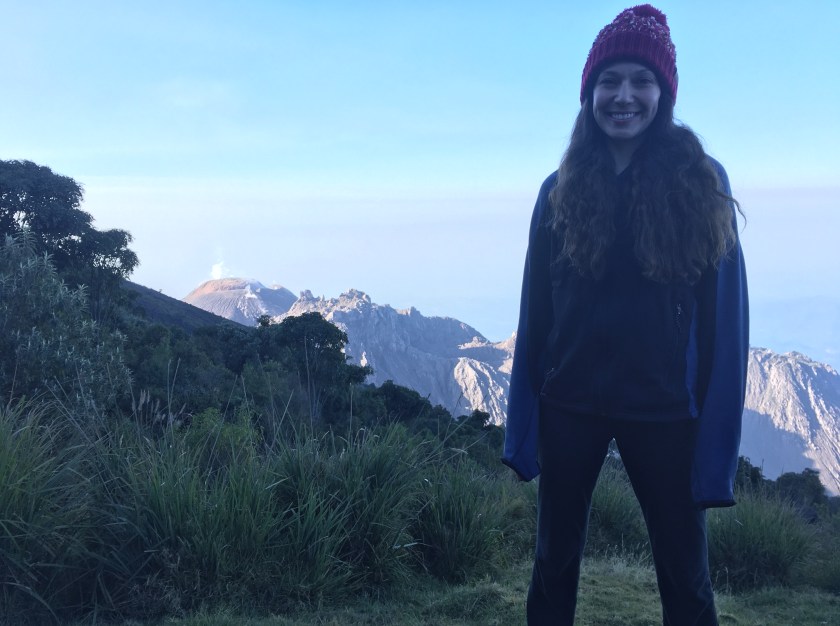
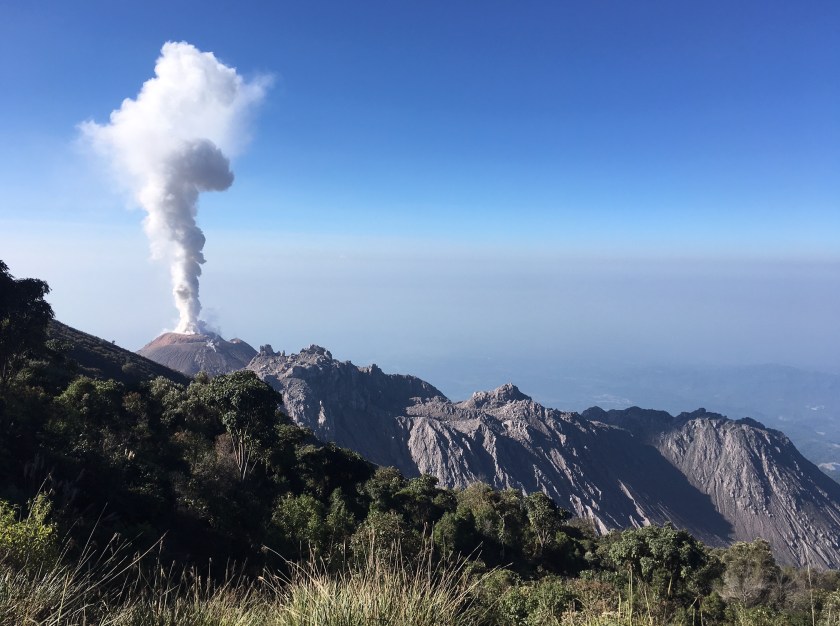
Santiaguito is a highly active volcano, and as such you don’t hike the volcano itself, but rather a nearby peak with a good lookout point–a mirador. It’s a half day hike that isn’t terribly strenuous, and well worth the 4:30 am wakeup call.

We went with guides from a local non-profit Quetzal Trekkers. They are cool in that 100% the money you pay for the hike (about $32 for this one) goes to fund a nearby school for over 160 children ages 5-15. Your payment includes your guides, transportation to the trailhead, and a simple breakfast and lunch. The entire organization is run by volunteers, including the guides, and fundraising is done to pay for their overhead. I’m into it. If you ever find yourself in Xela, Guatemala, I highly recommend booking a hike with them!

Sometime in the not too distant future I plan to hike Santa María with them as well, which is a 12-hour much more involved hike. Stay tuned for that post! For now, here are my photos from Santiaguito:

Santiaguito doing its thing. The eruptions sound like a jet engine.

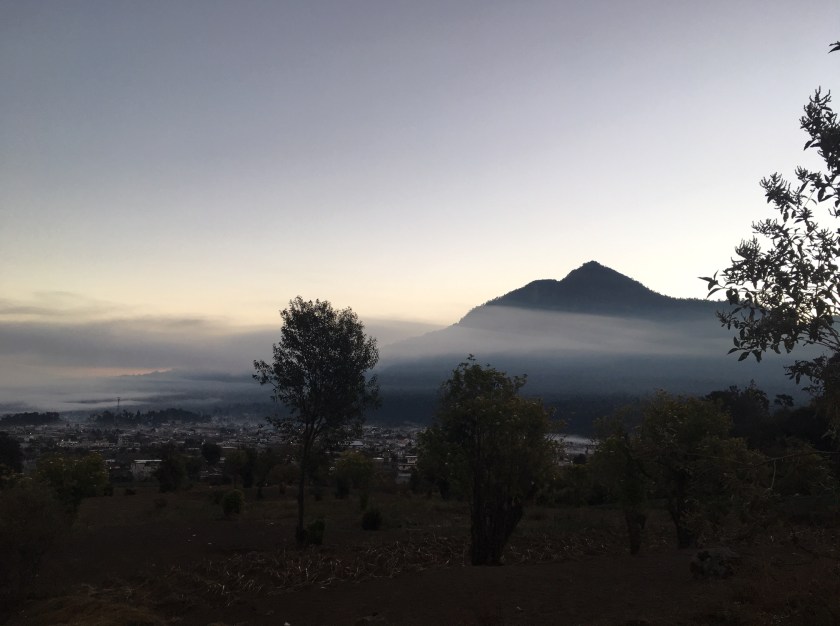
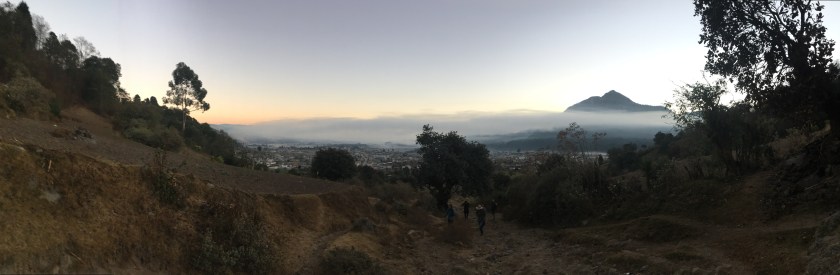
Early morning vibes on the hike up to the mirador.

Misty mountain hop.

Santiaguito behind me prior to any major activity.

Alex, Megan & I early in the morning, pre-eruptions.

Santiaguito going for it!

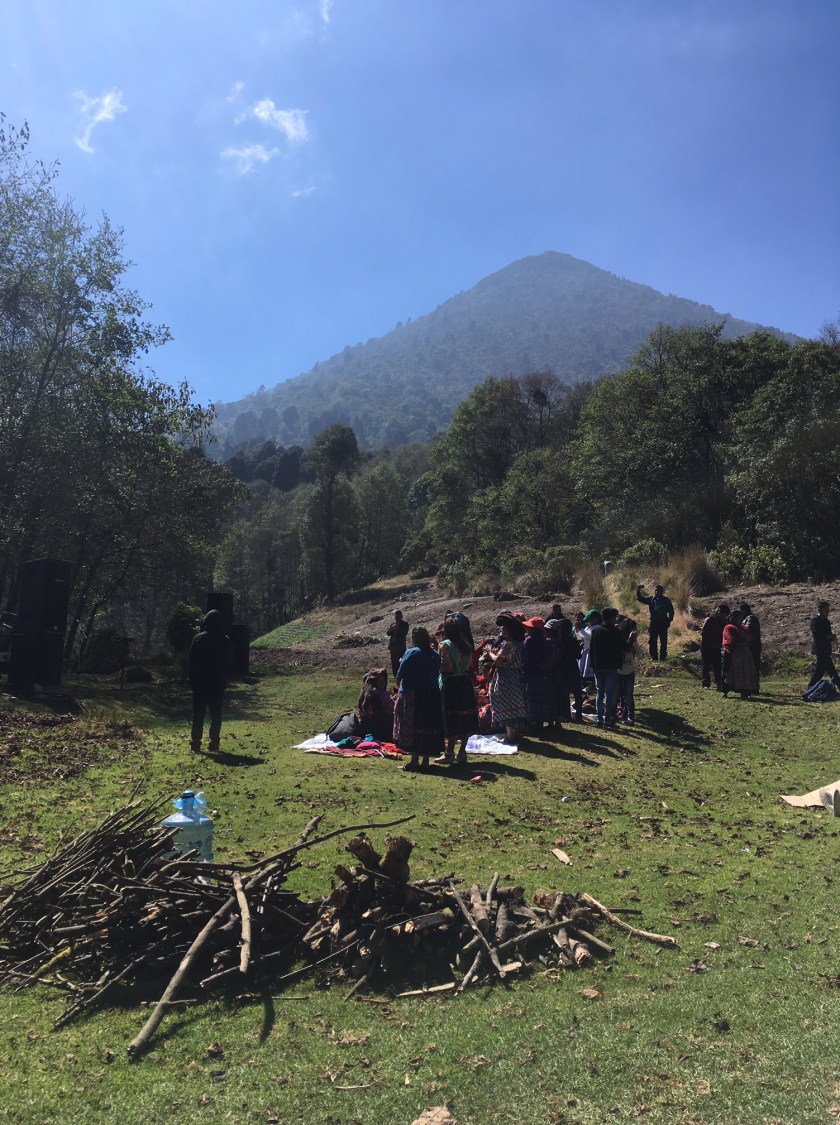
Local Mayan people having a celebratory Sunday on our hike back down. There was a band with an immensely loud PA singing songs for Jesus.

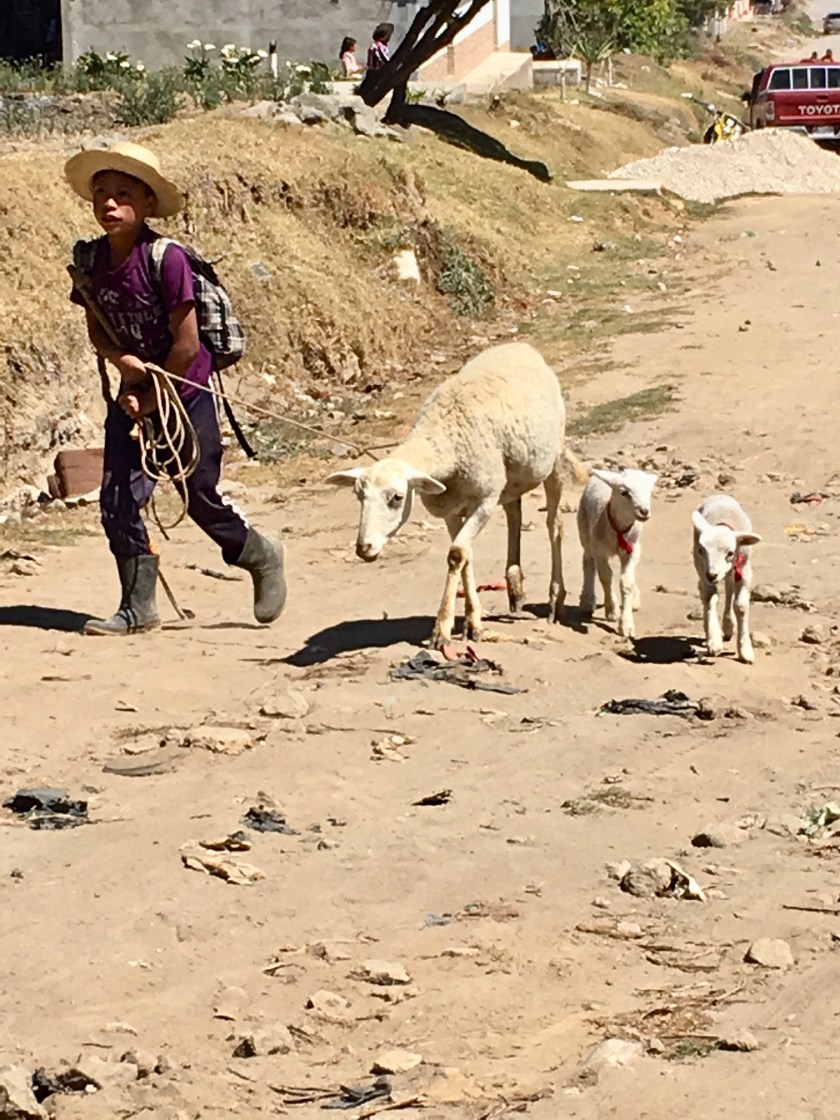
Young shepherd heading up the mountain.

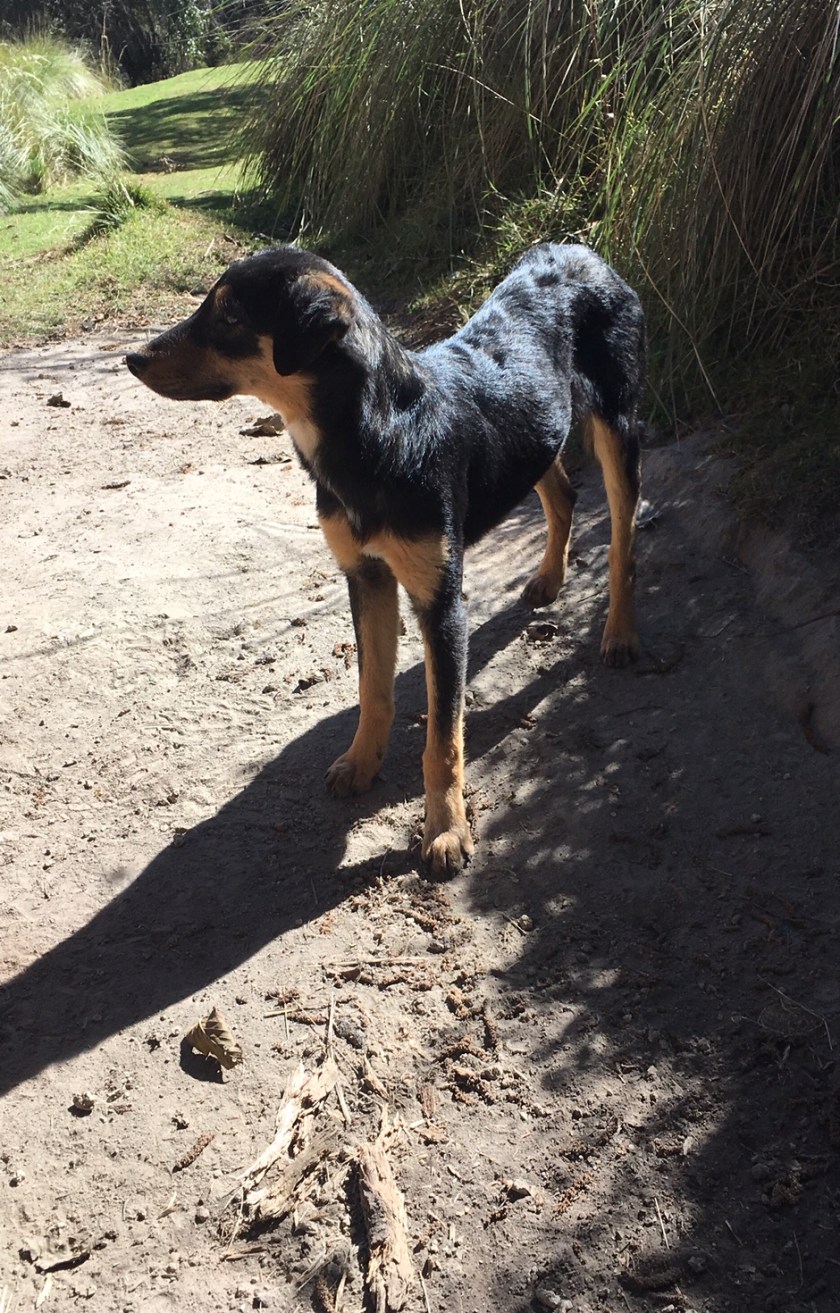
Another shepherd’s dogs. We stopped to talk with him while he was on his way up, and we were on our way down. He told us that the packs of wild dogs that live at the dump keep killing his sheep–over half of them.

There’s a lot of cultivation up the sides of the mountains.

My Homestay

Mi familia

When I arrived in Xela last Thursday afternoon, every detail about my homestay family was a mystery to me. I had no idea what to expect, other than someone from my new family would be meeting me at my school upon my arrival.

The woman who came to greet me, my Guatemalan mama, is a tiny woman with a larger than life personality by the name of Catalina. Catalina has a beaming smile with many missing teeth, and a knack for animated storytelling using her whole body for emphasis. She made me feel at home right off the bat, and lovingly refers to me only as hija or princesita. She is a sorceress in the kitchen, whipping up feasts of simple but delicious local cuisine for breakfast, lunch, and dinner. I am in very good hands here, that is for certain!

Catalina has two sons: a 36 year-old landscaper in San Diego, and 17 year-old Antonio who lives here and attends university. The other permanent member of the household is 83 year-old Tía Margarita, a very darling but very unwell tiny old lady, with whom I share the back wing of the house.

Catalina runs the household; there is no man, and as of right now I don’t know the story of his whereabouts. She earns her living by hosting international students such as myself, and the three extra bedrooms here are nearly always occupied.

Most students stay only for a week or two, so turnover is high. So far I’ve had roomates from Japan, Australia, and Canada–all very interesting people, most much older than myself, and all mealtime conversation is in Spanish. I’m sure over the course of the next seven weeks I’ll share space with many more fascinating people from all around the world.


Mi Casa

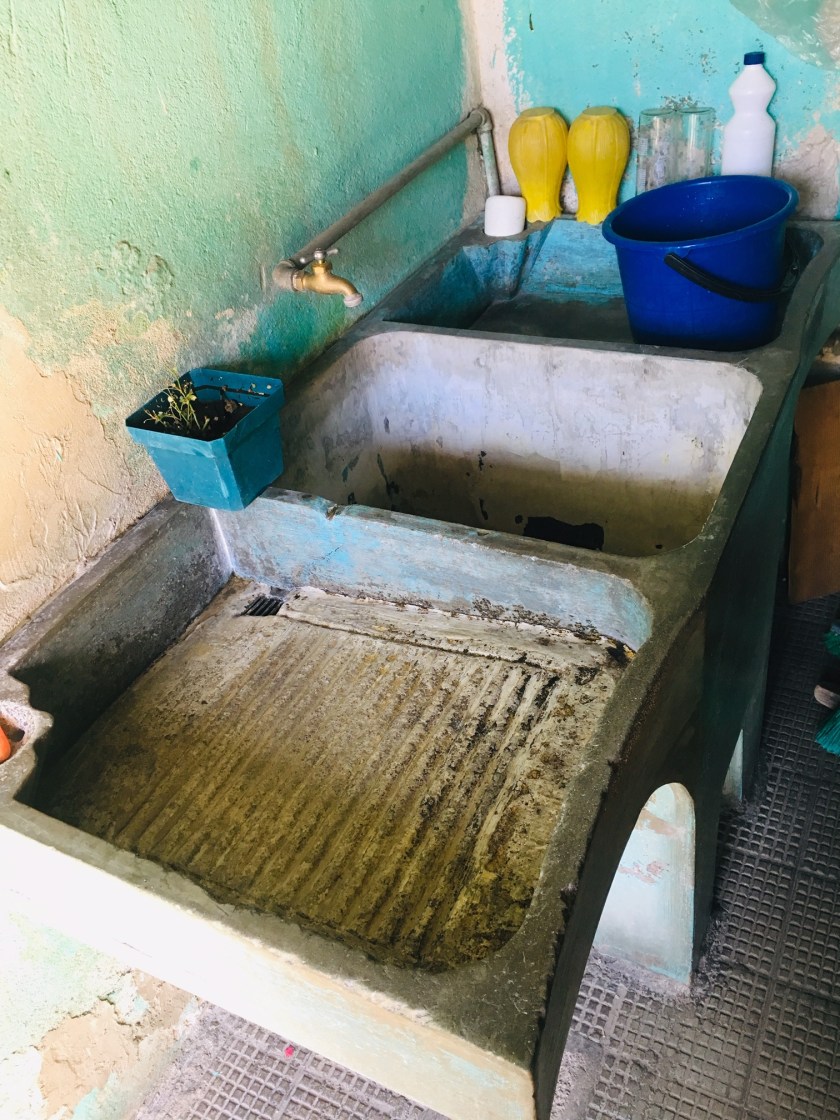
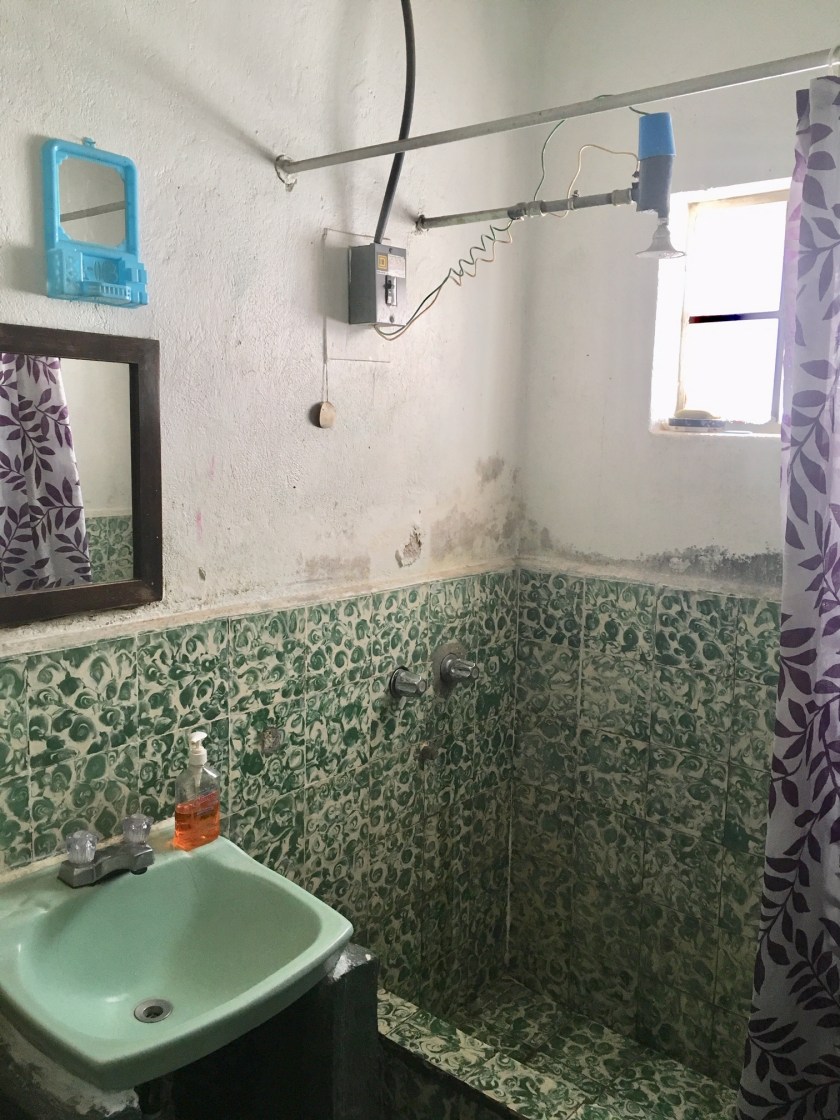
The household is one level, and all rooms extend off of one long central hallway. Out back is a sunny courtyard with a many plants and a colonial-era pila sink for doing laundry. There are two bathrooms, and the showers have electric heaters that at least bring the water from frigid to lukewarm.

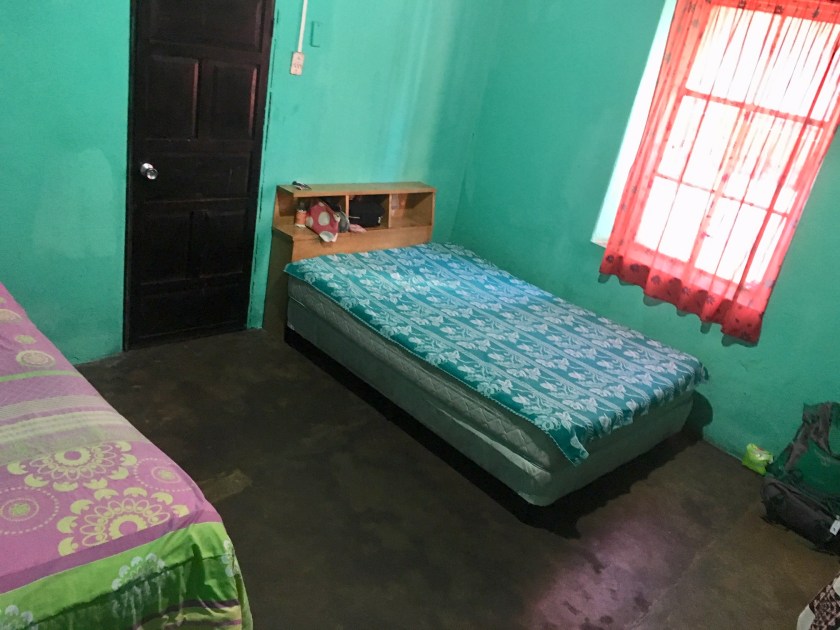
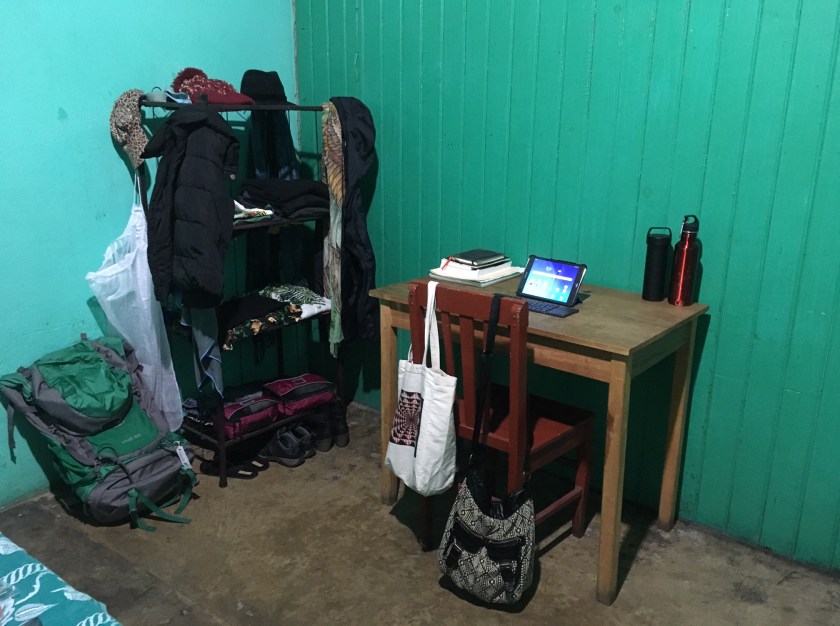
My bedroom is quite large and has two beds. I chose the single bed furthest from the window, because the window doesn’t fully close and nights are cold. Even in my bed across the room with two thick wool blankets and a snazzy comforter, I sleep wearing wool socks, pants, a long sleeve, and my hoodie tied beneath my chin.

The color vibe is on point with my cheery turqouise walls and red window curtain, and I must say I’ve grown quite fond of my space in the week that I’ve been here.

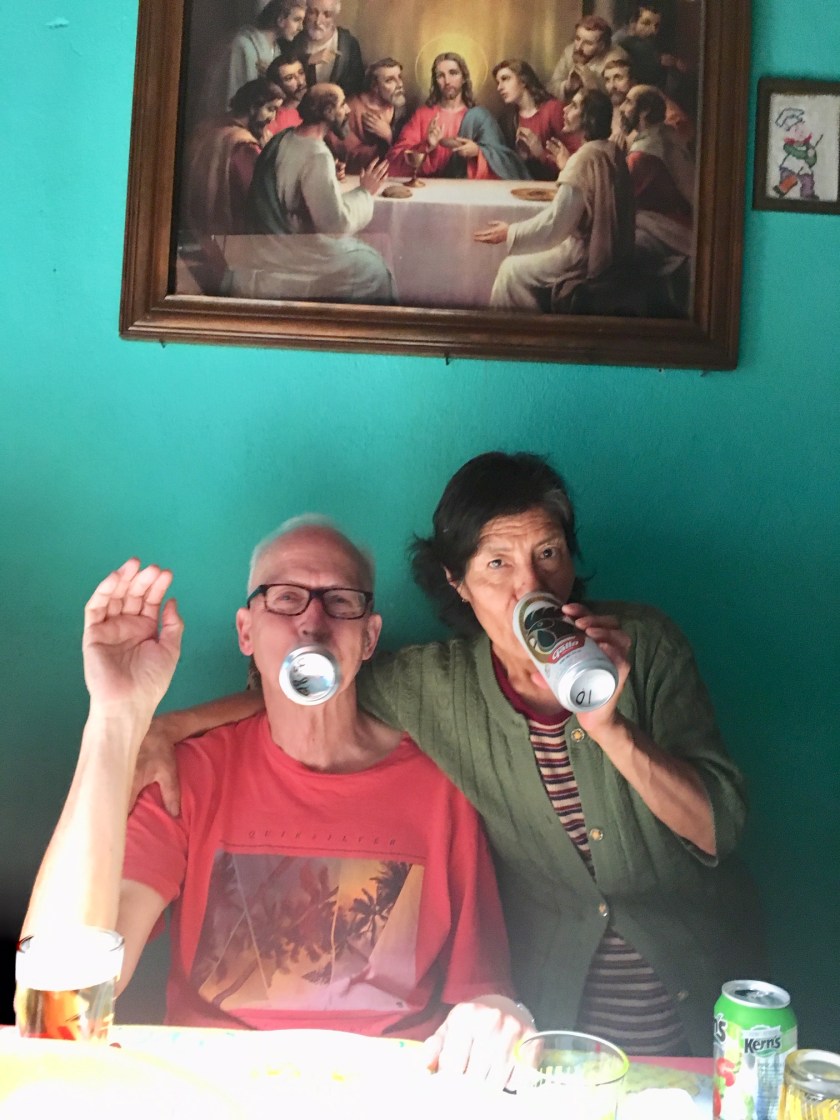
Catalina and Tom hammin’ it up for the camera. Today is Tom’s 72nd birthday, and we had afternoon micheladas to celebrate. It’s his 6th year in a row traveling here from Canada to study Spanish and live at Catalina’s. How cool is that? I’ll take more pics of the fam to share another time!

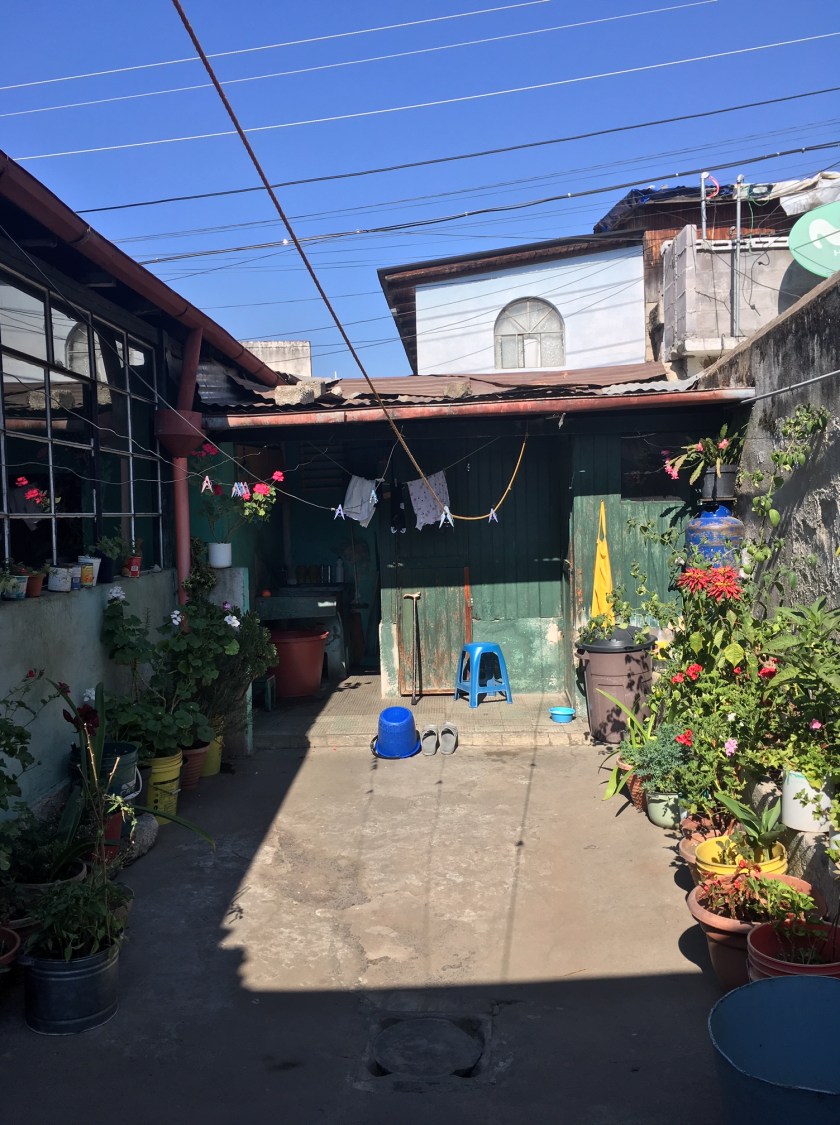
The sunny courtyard full of life. The second bathroom is in on the right, and the pila for laundry is on the left. Margarita and I live right across the hall from the courtyard on the left. Micho the neighborhood cat comes to the roof daily for food–more on Micho later!

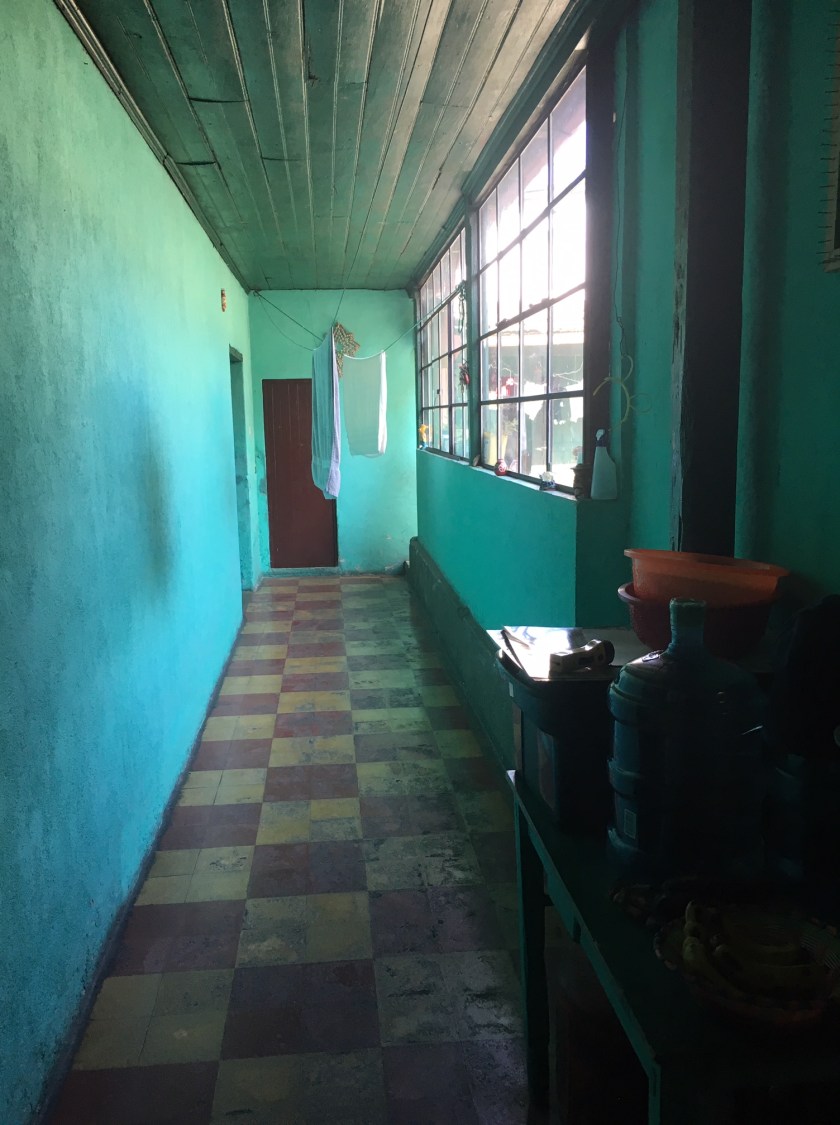
Long hallway. Bathroom straight ahead, Margarita & my quarters on the left, door to courtyard on the right.

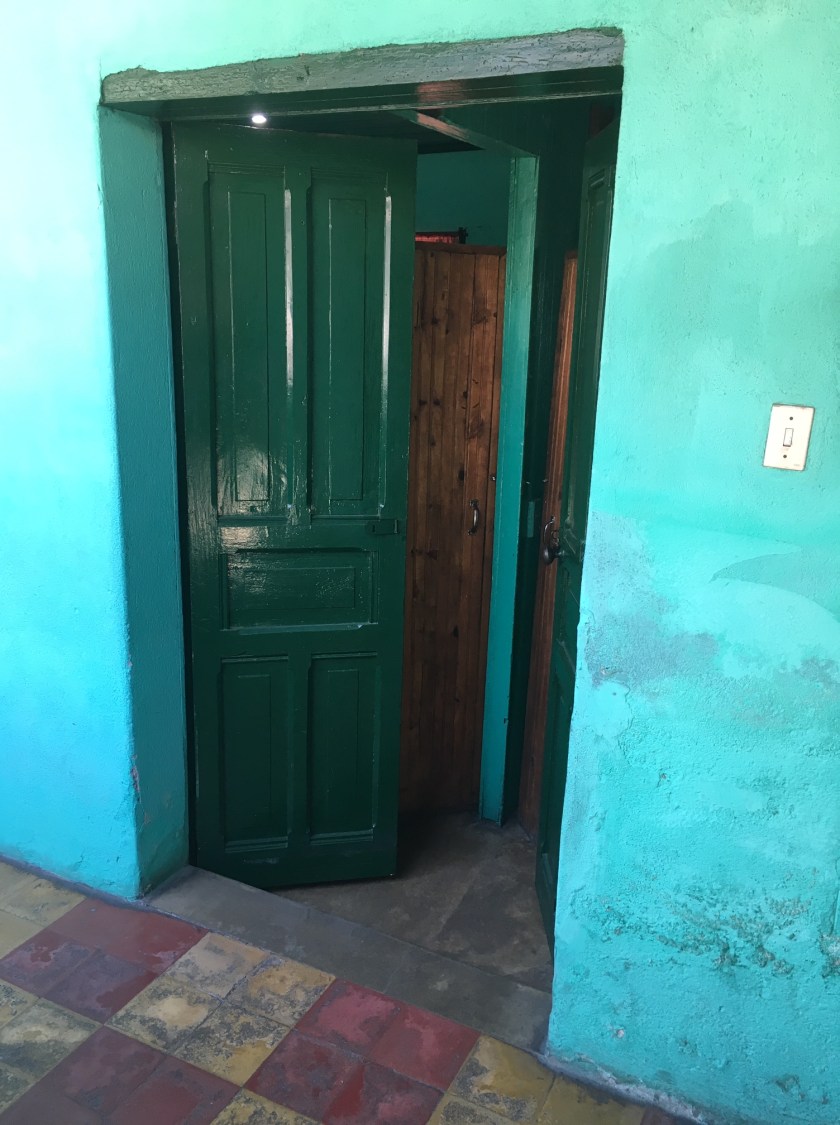
The big green doors are closed at night to keep heat in for Margarita and I.

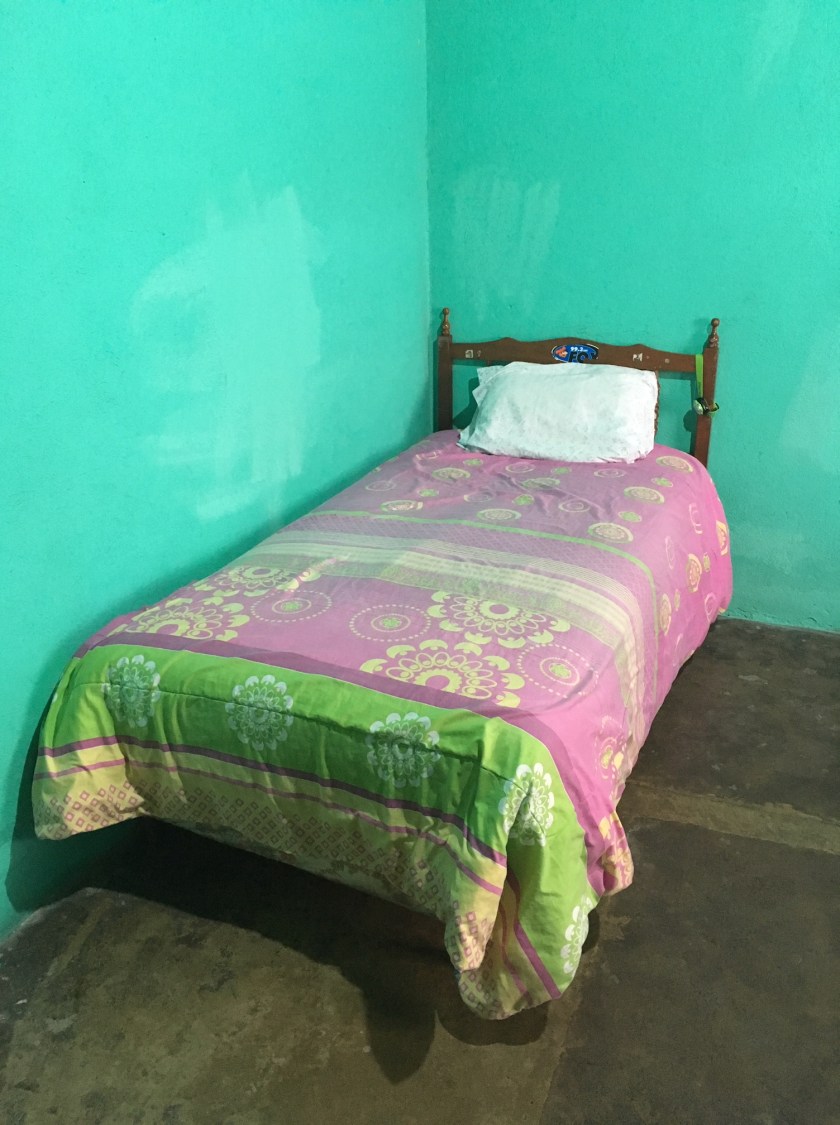
My lil bed with my snazzy comforter and two very thick wool blankets beneath.

The other bed in my room and my pretty red curtain.

My little corner of Guatemala. I love it so much.

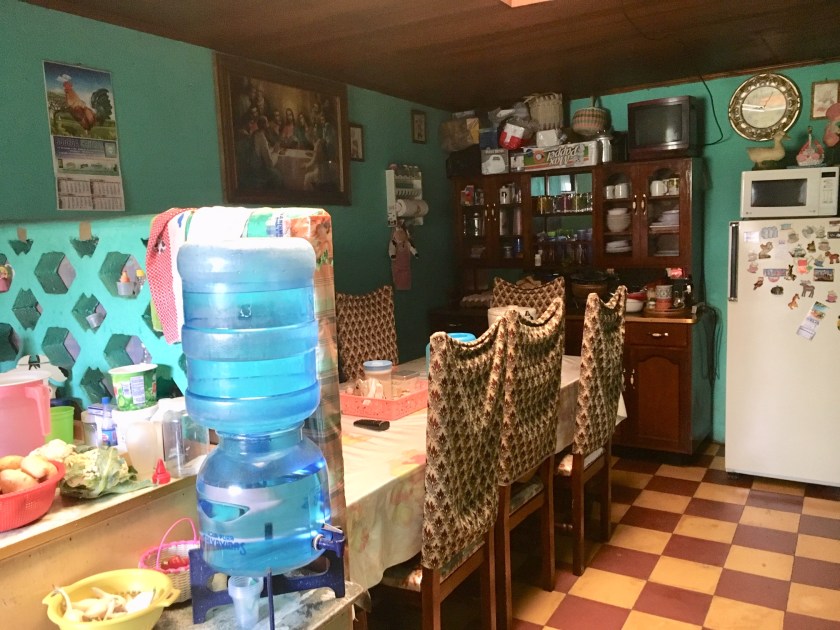
The dining room. There are always plenty of people surrounding this table at mealtime.

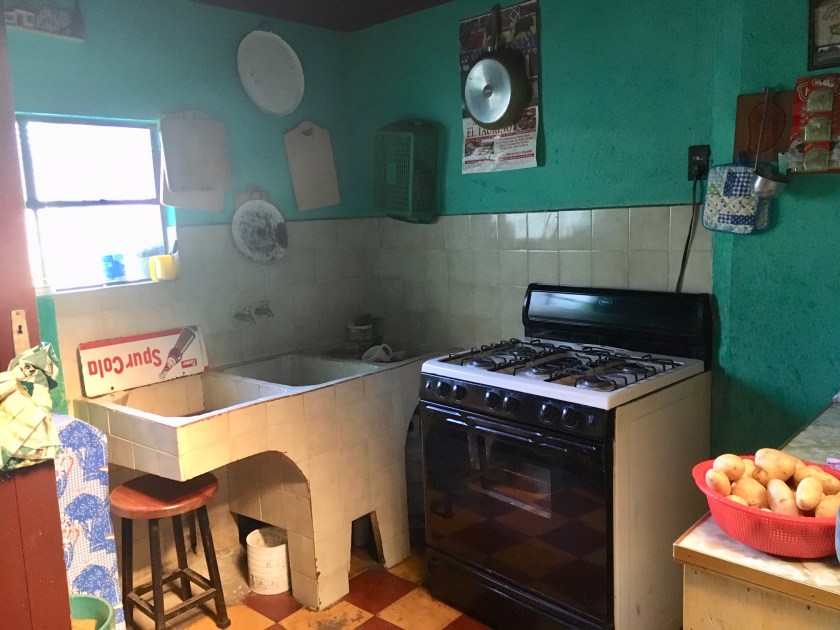
Catalina’s kitchen, where the magic happens.

The pila out back for laundry.

The electric shower that almost, almost, almost gets warm enough.

What brings me to Guatemala?

My first week in Xela has been a whirlwind, and as it goes, I haven’t had a moment to sit down and shoot out an update. Now that it’s Saturday morning and I have some free time and a steaming mug of Guatemalan coffee, I’m ready to write!

To rewind a little bit, I’m sure there are those wondering: What are you doing in Guatemala in the first place?

Well, in the beginning of 2018 I set a bit of a self improvement goal, which was to vastly improve my Spanish over the course of the year. I had studied Spanish in school for years, took a couple of semesters in college, and always wanted to actually learn the language…but it never clicked. When thinking about job opportunities in either education or social work, knowing another lanuage–Spanish especially in California–is a huge asset. So last year I set out to learn the language once and for all.

I used DuoLingo every day (I had a 230 day streak until I lost it while up at the Camp Fire!) and began listening to the DuoLingo Spanish podcast. Their podcast is good for lower-intermediate learners, because there is an English speaking narrator who interjects between the Spanish segments with contextual anchors. Each episode is a real life story told by Spanish speakers from all over the world, and they’re very well put together and fun to listen to. Once I was able to easily understand those podcasts, I switched to another podcast called españolistos.

Españolistos is fully in Spanish, and is a husband/wife duo who discuss all kinds of engaging topics for about 30 minutes per episode. Their podcast is for intermediate-advanced learners who are looking to improve their Spanish. In addition to podcasts, I used the site Conversation Exchange to find Skype buddies from Latin America. Coordinating schedules with a language partner can be tricky, and therefore I had far less opportunities to speak Spanish than I had to listen to it.

My comprehension abilities far surpassed my speaking skills, and the idea to do an immersion program in a Spanish speaking country began to take root in the back of my mind.

Why Xela, Guatemala?

I began researching Spanish immersion programs in Latin America, and Guatemala kept popping up as a popular destination for language learning. Guatemala has an abundance of accredited schools with a variety of offerings at very affordable rates–most schools range from $150-$250/week, and the price includes 25 hours of one-on-one language instruction with an experienced teacher, a homestay with a local family, and three meals a day at your homestay. What a deal!

Once I began reading about Xela, Guatemala, I knew it was the place for me. Xela is a good place for serious language learners, because very few locals speak any English and the expat community is quite small compared to more touristy destinations such as Antigua or Lake Atitlan. Therefore every interaction–asking for directions, ordering food, speaking with store clerks, bank tellers, your homestay family, and your teacher at school must be carried out in Spanish. This was a big draw for me, as total immersion is what I want.

When life threw me a curveball at the end of last year and I needed to pack up my life and move, I knew that I needed to take it as an opportunity to bring the idea of language immersion into fruition. So here I am!

A Bit About Xela

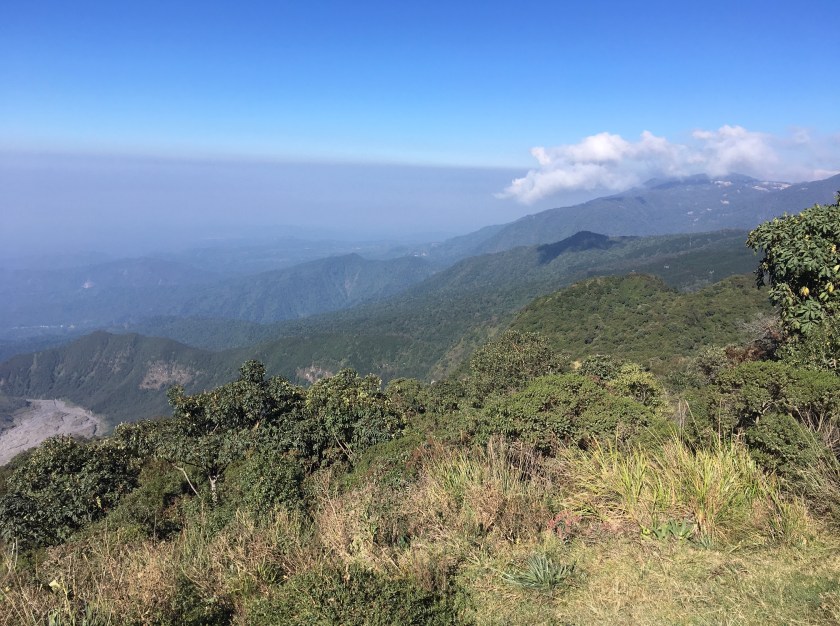
Xela is a city of about 150,000 people in the Western Highlands of Guatemala, about four hours north of Guatemala City. Its name on the map is Quetzaltenango, which is the name the Spaniards gave it after conquering the area in the 1500s. Nobody here calls it that however–people call it by its orignal K’iche’ Mayan name, Xelajú or Xela for short, which means under ten mountains. The name is fitting, as it’s nestled high in the sky amongst many mountains and volcanoes, including Volcán Tajumulco, the highest point in Central America. Volcán Santa María and highly active Santiaguito tower over the city as well.

Xela is at an elevation of 2400 meters at its highest, which is comparable to Mammoth in California. Being so high in the mountains makes for cooler temperatures than much of Central America, and the temperature shifts drastically between day and night. During the day this time of year the sun is glorious and the temperature is in the 70s, and it dips down to the low 40s at night.

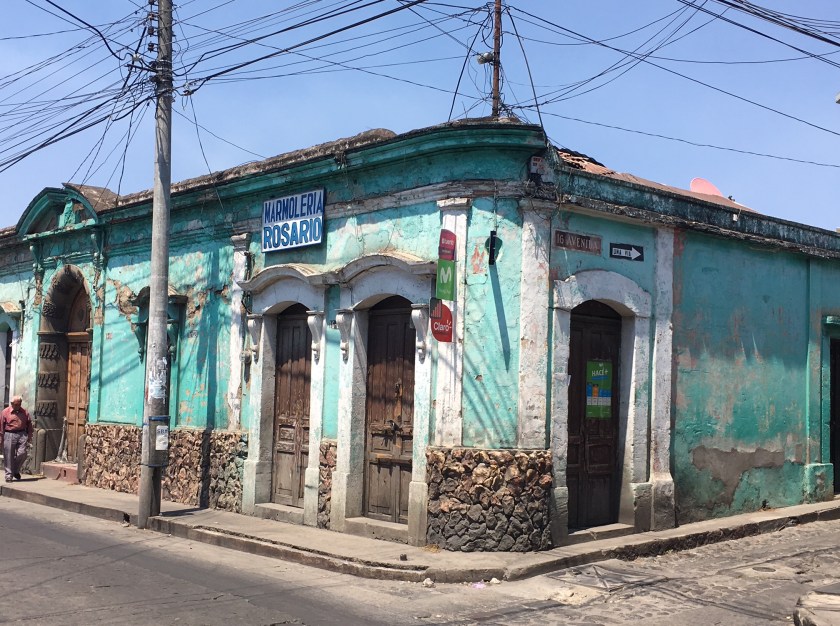
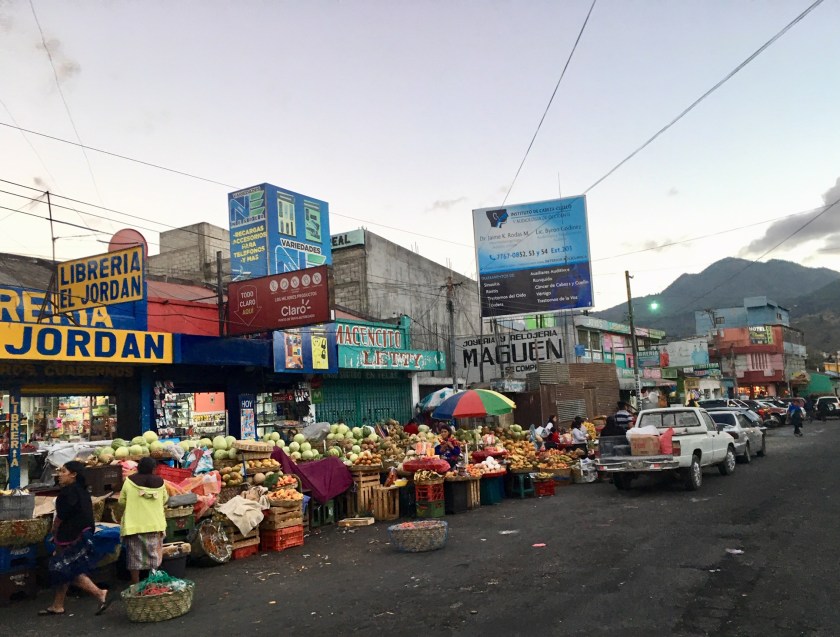
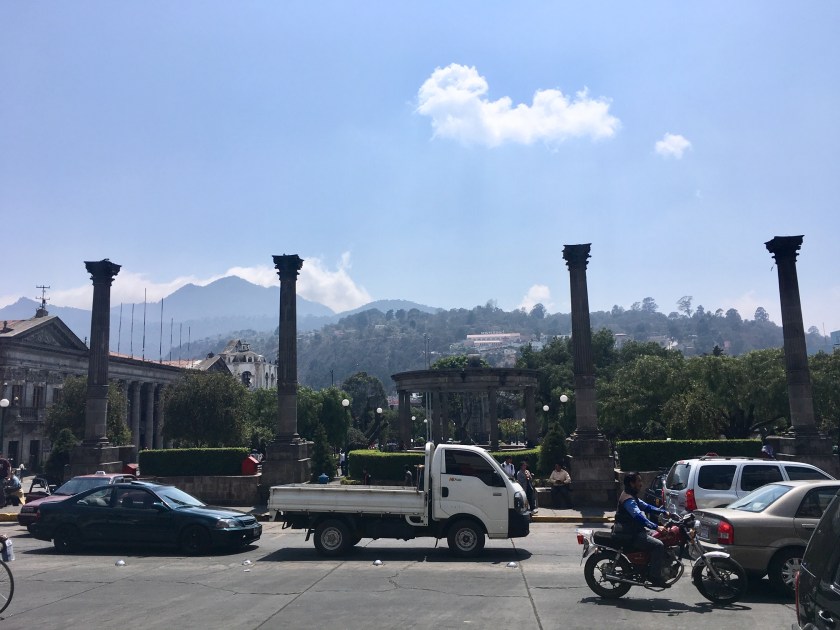
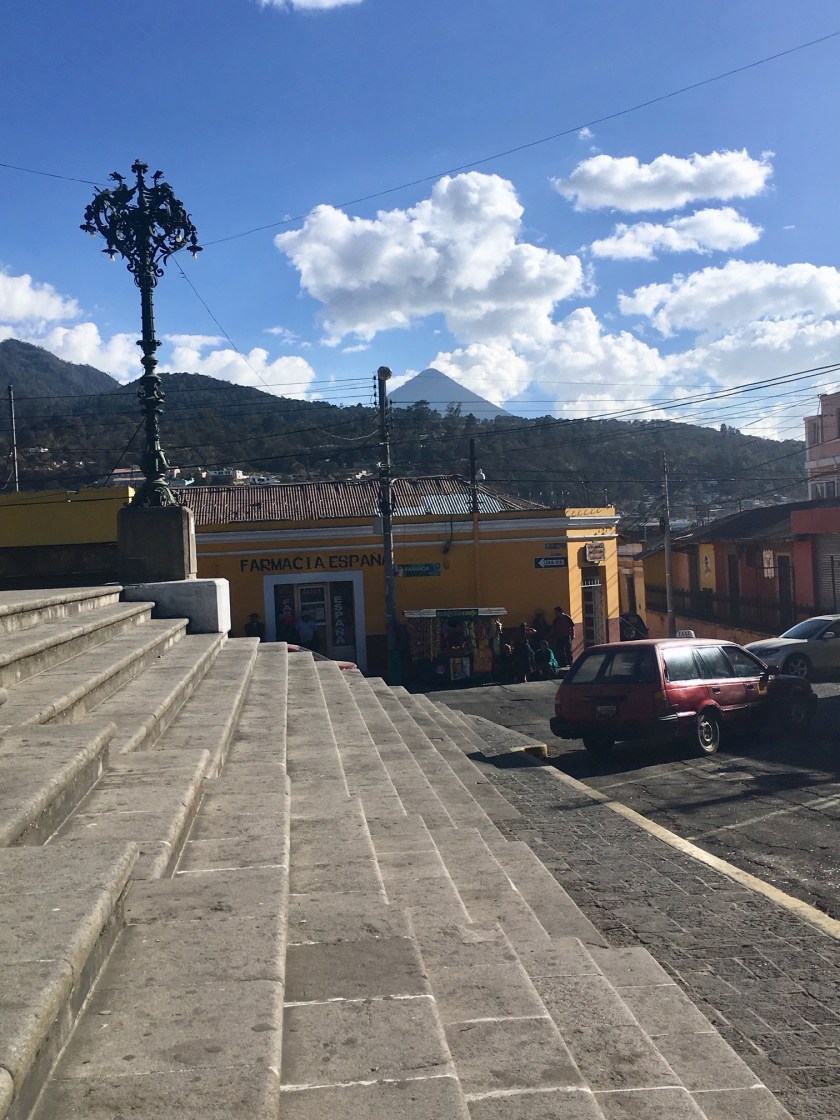
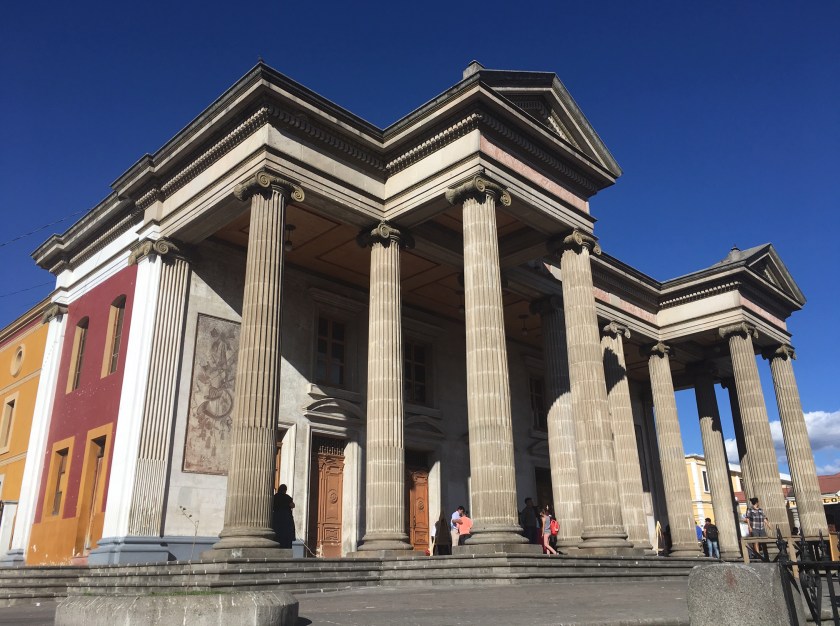
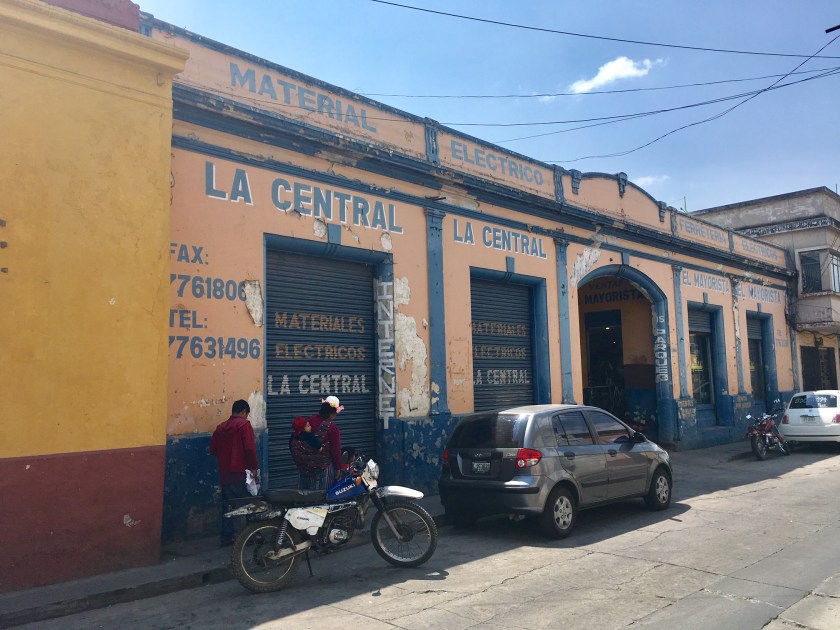
Here are a handful of photos about town I’ve taken so far:

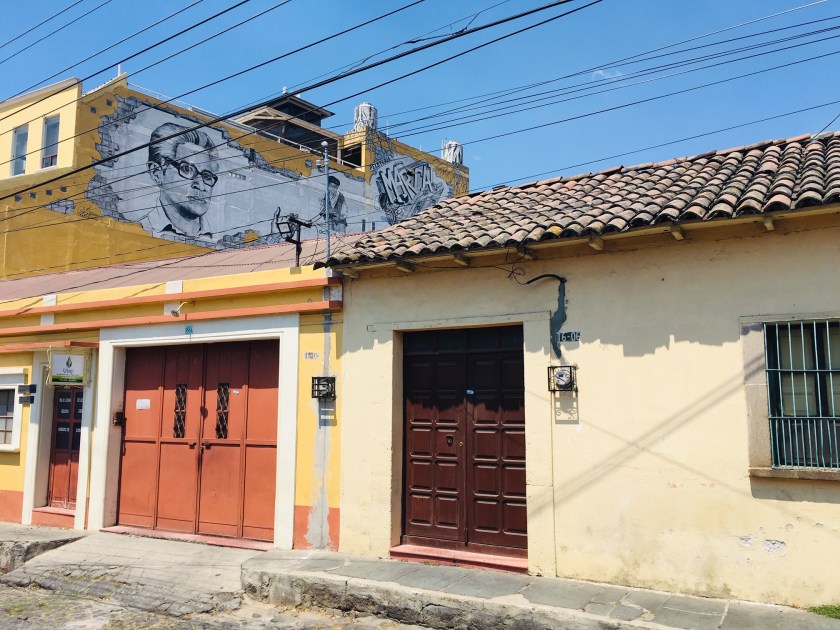
I love the above building. It’s where I take a right to walk home and it makes me happy every time I see it. There are many marmolerias nearby, to have headstones made for the nearby cemetary.

Above is Mercado La Democracia, a bustling daily market many blocks long.

View from the bank toward Parque Central.

View from the steps of Teatro Municipal, with Volcán Santa María presiding over the city.

El Teatro Municipal, built in 1895.

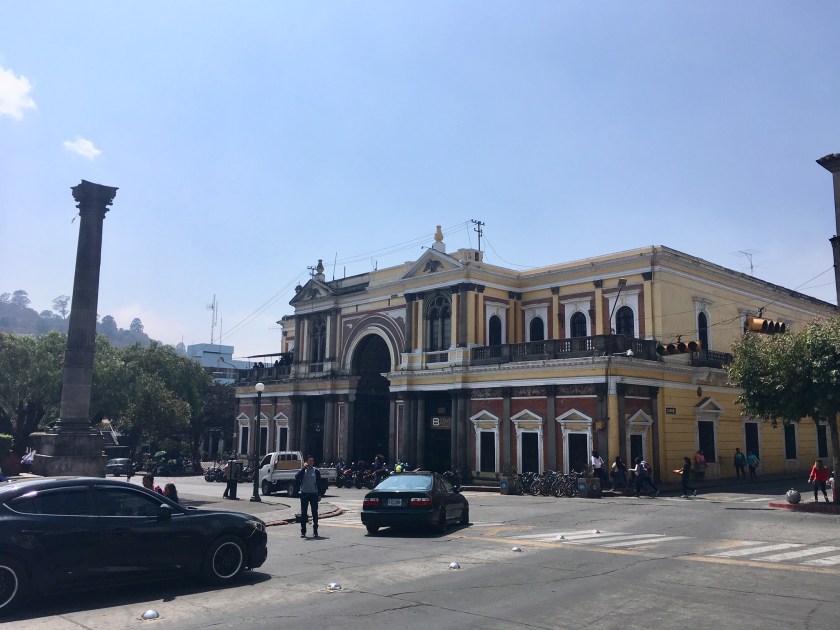
Inside that old train station are many restaurants, with a lively nightlife on the weekends.

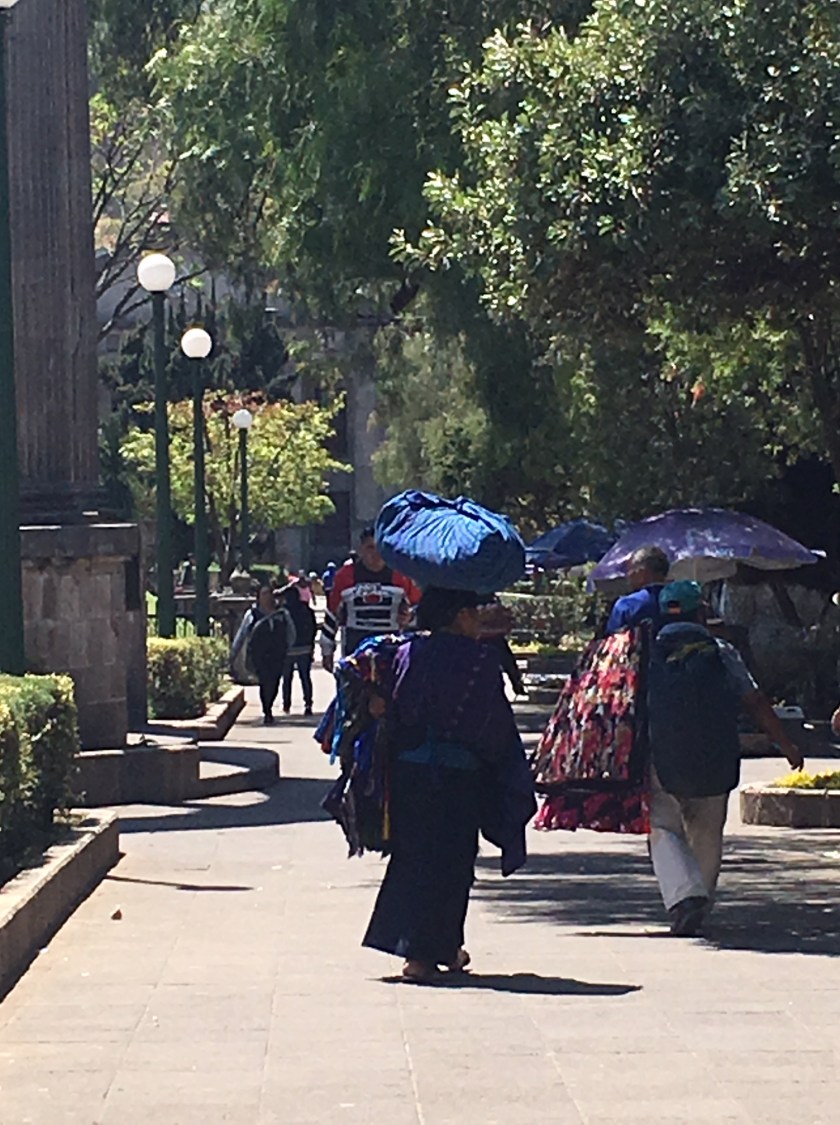
A woman strolling the park with her textiles to sell to tourists.

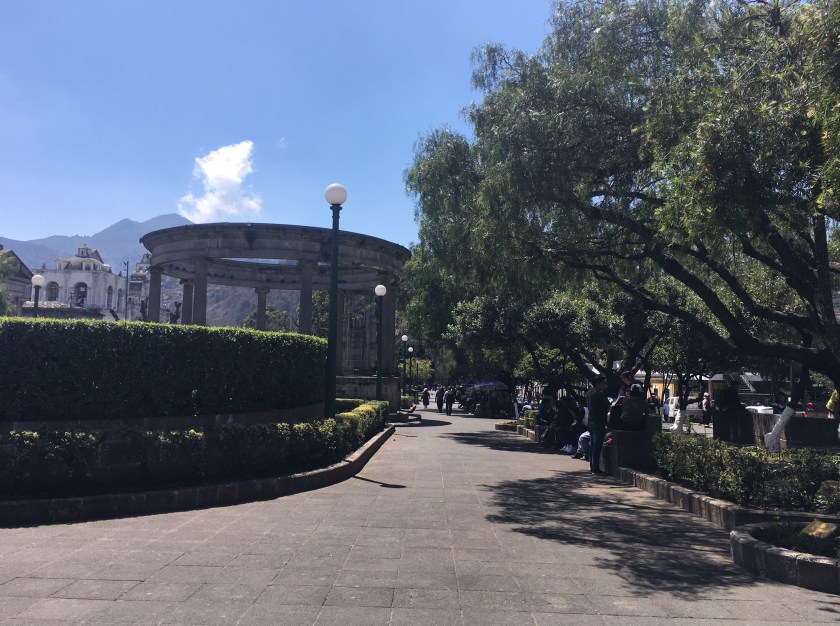
More Parque Central. I like to post up here on the stone benches in the sun and watch the people pass me by.

I have arrived!

Greetings friends and family, from sunny Guatemala City!

I made it to my hotel just before midnight last night after a 15-hour travel day, flying from Albany>Orlando>Panama City>Guatemala City. Phew!

My travel day was interesting. Copa, the Panamanian airline I flew for my last two legs, was not as thrilled as I am with the fact that I have only a one-way ticket to Guatemala. At the counter in Orlando I was peppered with questions about my travel plans. I explained that I am going to be studying Spanish and volunteering in Xela for about two months, then plan to take a bus to Honduras to go scuba diving, then am not all of the way certain after that but that yes, I do intend on returning to the States in several months. They asked to see emails from my Spanish school showing that I was in fact going to be studying, and when they were fairly satisfied with my story they handed over my boarding pass.

Once I got through the hour-long security line full of post-Disney World meltdown madness at the Orlando airport and made it to my gate, I was again stopped and questioned before boarding. Four airline workers pulled me aside and said they would not allow me to board without a ticket out of Guatemala. They said to take out my phone and book something now–as people were streaming past onto the waiting aircraft. Yikes! I said I’ll be studying Spanish for 8 weeks, perhaps 10, and that I don’t know when exactly to book a bus ticket to Honduras for. One of the women mercifully just told me to go ahead and board and that she’ll put in the system that I have an exit ticket. She won in my book yesterday!

The plane to Panama City is where my Spanish immersion began. The plane was full of exhausted but smiling Panamanians with Mickey Mouse ears, excitedly sharing stories of Disney World and Universal Studios. The rapid fire Spanish was such that I was picking up maybe 40% (if that) of what was being said with my passive eavesdropping. This definitely gave me a fleeting moment of Oh shit, am I in over my head here? But then I laughed to myself thinking well of COURSE you are, that is the definition of immersion. Diving right into the unknown and figuring out how to swim!

Getting into Guatemala City and through customs was uneventful and mellow, and I stayed in a cute little hotel close to the airport last night. I’m still here now, and will soon be taking a taxi to the bus station for my 4-hour trip north to Xela. There I will be heading straight to my school to complete my enrollment, and to meet the Guatemalan family I’ll be living with for the next two or so months!

I’m so excited about my homestay. It’s exciting that I know nothing about them yet–how many people I’ll be living with, if they have children, if (hopefully!) they have a pet I can snuggle. Later today these questions will have answers. Stay tuned!

During these next few days I’ll be getting to know my family, clumsily hacking my way through conversations in Spanish, and exploring my new city Xela a bit before I start my 25 hours/week of one-on-one Spanish instruction on Monday. More on all that later as well.

Time to get ready for my bus trip now. Sending love to you all! Hasta pronto!